Friday, September 28, 2012

Remembering Grand Turk

Grand Turk - I lived on this island during 1985-1986
Before they closed the front door of the Jet Blue Airlines flight to San Juan I asked the first officer if we would be passing anywhere near the Grand Turk VOR. The omnidirectional radio beacon on the island is used by airplanes navigating their way to and from the Caribbean, and especially flights from the south Florida to Puerto Rico. "Yes," the pilot said, "we should pass about 10 miles south of the VOR." He then added, "I've never had anyone ask me about Grand Turk. How do you know about it?"
A Bahamas Air flight from Nassau deposited us on South Caicos Island only 20 hours later than our scheduled arrival. Experience with this airline would teach me that 20 hours late is almost on time and as the Jamaicans always say, "no problem, mon." However at the time it was a problem. I was supposed to arrive on South Caicos where I was supposed to make a connection to Turks and Caicos National Airlines to fly a short 20 minute flight over to Grand Turk island, the administrative capital of the Turks and Caicos Islands. About the only reason anyone would have for knowing about Grand Turk is that when John Glenn made his historic orbiting flight of the earth on February 20 1962, his space capsule landed offshore from Grand Turk where he was scooped out of the water, debriefed at a former US Air Force facility on the island, and then flown back to the United States. Nobody had much thought about the island ever since.
I was supposed to land on Grand Turk on February 20, 1985, exactly 23 years to the day after I sat in Mrs Hubbard's fifth grade classroom and listened to this historic flight on public radio. Now, however, because of a broken plane and general ineptness, Bahamas Air made me arrive a day late.
My concern about being so late arriving on Grand Turk was that I had an appointment on February 20 at 4:00 p.m. with the honorable Norman Saunders, the Prime Minister of the country. I had met governor's before and US Senators and a few members of the US House of Representatives but never before had I met the President of a nation. And now, thanks to Bahamas Air, I was going to be late. On arrival at Grand Turk I went immediately to the President's office in a rickety old building in "downtown" Cockburn Town. There I apologized profusely for my tardiness and asked if there was any other time the Prime Minister might be available. I knew that he was extremely busy so I would appreciate any time he could spare. His secretary confirmed that the Prime Minister was extremely busy and then said "why don't you just walk in and have a chat with him now, mon."
Although a British overseas territory, the Turks and Caicos Islands had their own government and their own leadership and the leader was the Prime Minister. I walked into his office and found him with his feet up on his desk smoking a cigar and looking out the window. So much for his extremely busy schedule. Introducing myself he asked me to be seated and it was then that I told him the story of why I was on the island (doing research on an endangered species of bird that likely spent the winter on the island) and could we count on him and his administration to help us out as needed while conducting the research. The Prime Minister confirmed that he would do everything possible to help us. Of course less than a month later the Prime Minister was arrested in Miami after accepting money from Colombians who were actually undercover DEA agents with whom the Prime Minister made a deal for the safe passage and refueling of drug planes passing through the Turks and Caicos Islands. Mr Saunders wasn't much help after all.
We traveled to Grand Turk searching for Kirtland's Warbler an endangered species of bird that had become my passion and the focus of my research efforts in those post-North Dakota days. My assistant Paul Sievert, now Assistant Unit Leader at the University of Massachusetts Cooperative Fish and Wildlife Research Unit, found four different Kirtland's warblers in the four days we were on the island. Given Paul's success we planned to return the following winter and focus our efforts there.
A Kirtland's Warbler
At this stage of my exploration of everything with which I was not familiar I was mesmerized by Grant Turk. At the time it was the furthest south I had ever been and the furthest east. Just ninety miles south of me was the massive island of Hispaniola and all the excitement exploration of it could offer. The remoteness of the island was also a big draw. I remember once calling my colleague Mike DeCapita in our office in East Lansing Michigan from the old US Air Force Base (South Base) on the island. Looking out my window at the Atlantic I remember gloating as I told Mike that the next land east of where I sat was Africa. I knew I had to spend more time on this island.
Returning the next winter with Grand Turk as my home I was eager to find lots of Kirtland's Warblers and learn lots of cool things about it and its winter habitat and do what we could to keep the animal from going extinct. Despite having three people working with me we found only one Kirtland's Warbler all winter and that was a fleeting glimpse of one bird one afternoon. That was it. Our rotten luck demoralized me and the people working with me and as the winter wore on that demoralization boiled over until things on the island came crashing down.
We lived in a house on the beach just a stone's throw from the ocean. From that beach you could swim out 50 meters to "The Wall", a 700 foot abyss that divers loved. At least three nights a week I would snorkel and spear fish on the reef in front of my house where I would bring in grouper or snapper or conch which I would prepare fresh caught out of the ocean not 5 minutes after the creature took its last breath. This was an idyllic place to live.
The view from my front steps during the winter of 1985-1986
As the winter wore on I met Gerry Benny, a crazed Canadian from Toronto who had been hired by the likes of Gordon Lightfoot and others to watch over a condo development on the island. It was Gerry's stated purpose to show visitors to the condo development a good time. Gerry had a PhD in showing people a good time. I thought that I was a fanatic Parrothead until I met Gerry who taught me what it really meant to love Buffett music. He had made a pact with himself to listen to nothing but Jimmy Buffett music the entire time he lived on the island. He ate mainly foods that were mentioned in Buffett songs and only drank drinks that were mentioned in Jimmy's songs. He also threw parties like Buffett would throw. Who could ever forget the night Gerry threw a massive party for three oversexed and estrogen-soaked Canadian doctors from British Columbia? The script for the party followed a verse in Buffett's song "Gypsies in the Palace" where Jimmy sings "Lets all take our clothes off and form a conga line." At 3:00 in the morning one toasty morning in February thats exactly what we did as about fourteen of us danced and carried on drunk and naked in the pool of Gerry's condo development.
Gypsies In The Palace by Jimmy Buffett
I woke up the next morning and found one of the Canadian doctors laying naked in bed next to me. I wasn't sure how she got there but I had a hunch what may have happened while she was there.  Rolling out of bed later that morning (or was it noon) I sat down with a pen and one of the cute little post cards I had purchased on the island and decided to send a note back to my former wife, now, hopefully, freezing her ass off in northern Wisconsin while I was under a palm tree on a beach in a more hospitable climate. Thinking of what to say to her in this situation I simply relied on a the title of a Jimmy Buffett song and said "Dear Ruth. The weather is here. Wish you were beautiful." I signed it, put it in the mail box and never heard back from her. I often wondered why.
The Weather Is Here, Wish You Were Beautiful....by Jimmy Buffett
Pan Am Airlines used to fly twice weekly to the island from Miami on a usually half-full 727 aircraft. The planes always took off on runway 9 facing directly into the persistent east winds. To line up for the flight the pilot had to take the plane to the far west end of the runway where the plane and all the occupants of the starboard side would turn and momentarily face south before taking the runway and pointing east. When Gerry and I figured out this process we turned this simple airplane departure into a cat and mouse game of "Lets Moon Pan Am". We would wait at the airport for the last passenger to walk out on the tarmac and climb up the rear steps of the plane. As soon as that person was there Gerry and I would dash off to the west end of the runway and wait. We would climb up on the hood of my car and as the plane approached and began its turn south, two large white asses would appear to the probable horror of the pilots and all the passengers watching us. Eventually the Royal Turks and Caicos Police Force got wind of this and would try to stop us but they never did. I think they enjoyed the cat and mouse game. At least it gave them something to do.
A Pan Am Airlines 727 - probably one that Gerry and I mooned at some stage that winter.
There were tons of other stories of things that happened on the island and maybe some day I will write a book just about this place. However suffice it to say it all came crashing down one April morning because of a phone call using a credit card and we all were ordered to leave the island. I returned the following summer with my friend Chris Haney and we hung out with Gerry Benny at his house on the beach. Our flight back to Miami was on one of the last flights that Pan Am ever made to the island. It was a fitting way to depart.
My only other contact with the island was in 1990 when the wife of the Queen's appointed Governor on the island called me for some help. Not long after our departure from the island in April 1986 the government of the Turks and Caicos Islands basically dissolved and it did so out of complete and total incompetence. Now instead of having an elected government the Queen in London and her appointed Governor on the island run the government. It turned out that the Governor was quite a conservationist and he had a sense for what was about to happen to many of the resources on the island so he wanted to establish a preserve to protect Kirtland's Warbler habitat. Although I wasn't allowed to travel there on Government time to help them with the establishment of this refuge I did so by phone and mail and now a large chunk of habitat just south of the airport runway is forever protected from development by a winter refuge for Kirtland's Warbler. Some good came out of all our time there after all.
I was thinking about all of this as the pilot came on the intercom and said "for the passenger in seat 3A we are about to come up on the Grand Turk VOR. I hope you enjoy your view after all these years."
Since my departure long ago there have been many changes on the island. Most obvious and expected is that the size of the human population on the island has grown while the size of the island itself has not. That can mean only one thing - more pressures on fewer natural resources. Its the story soon to be heard around the world. Most exciting for me is the presence, now for several years, of a Margaritaville Cafe on Grand Turk! In my quest to have a beer in all of his Cafe's I will have to go there. Margaritaville is now located on the grounds of the old South Base where John Glenn was debriefed. Its about 300 yards down the beach from where I used to live. Its right where the cruise ships come into port.
Margaritaville Grand Turk
As I scanned my old home from 30, 000 feet I felt a wisp of nostalgia just like I did a few minutes earlier as we passed over so many of the Bahamas that I came to know so well so very long ago. The last time I was on this island was in the summer of 1986, more than 26 years ago. I still think about Grand Turk almost daily. I think I need to go back there. And maybe rather than think about it I should just get on a plane or a cruise ship and do it. And when I do I'm sure I'll be singing this verse from that same song whose title I sent to my former wife:
Hes going back to New York, pack it up and let everyone know, It was something that he should have done such a long time ago. Still time to start a new life in the palm trees, Ah, Billy Clyde wasn't insane. And if it doesn't work out there'll never be any doubt, That the pleasure was worth all the pain.

Homesick for the Bahamas

Two weeks ago I flew from Tampa to San Juan Puerto Rico solely to visit the San Juan National Historic Site in Old San Juan, and to drink a Landshark Lager at what turned out to be each of the three Margaritaville Cafes in the San Juan Airport.
I traveled to San Juan on Jet Blue Airlines, an air carrier that I am quickly beginning to like more than any of the few that remain. Previous experiences with Jet Blue have all been positive and I've flown them to Cancun (twice), Aguadilla, Puerto Rico, Ponce, Puerto, Rico, San Juan Puerto Rico, Bogota, Colombia and in a couple weeks to Montego Bay, Jamaica. Each trip on Jet Blue has been enjoyable I think because Jet Blue's philosophy of customer service is to actually provide customer service.
As we lifted off from Tampa that Thursday afternoon I was seated near the front of the nearly packed Airbus A320 jet in my now-standard window seat. Ever since getting over my irrational fear of flying 30 years ago I have always sought out window seats if for no other reason than the geography lesson a window seat provides.
Because of some nasty thunderstorms over near Ratworld we were routed south from Tampa over Sarasota and on to Fort Myers where we were vectored east and passed over the Miami International Airport. Ever since my first time in the Miami airport in July 1984 I have loved that place. It used to be that if you wanted to travel anywhere south you did so by connecting in Miami. When I lived on Grand Turk Island in 1985-1986, the only way to reach the island (other than internal flights on Turks and Caicos National Airlines) was to fly on Cayman Airways or venerable Pan Am from the Miami airport. Although its no longer necessary to fly from Miami to get somewhere warm, I still look at MIA with the same excited child-like eyes with which I viewed it the first time I landed there.
From the edge of Miami we passed over the coastline and out over the open ocean. Doing so I was taken back to the many times I have flown to the Bahamas from the United States and especially all the times I flew "home" to Nassau from the Miami Airport. A check of my travel records shows that I have landed in the Bahamas on 51 international flights (all from the United States). Most of those landings have been in Nassau and almost all of the Nassau flights originated from the Miami Airport.
A few minutes after passing over the Gulf Stream I could see the extensive salt flats on the west shore of Andros Island the largest, and to me the most mysterious of the 2,000 or so islands in the Bahamas. When I was working in the Bahamas and had an office in the US Embassy in Nassau, I came to know several Drug Enforcement Agency agents posted there. Although it was not our purpose while there, we did some surveillance for the DEA while out on some of the "Family Islands" and always dutifully reported that information back to the DEA in the Embassy. Because of that relationship the DEA in Nassau took a special interest in our safety and they specifically forbade us from traveling on official government duty to Andros Island. The reason was simple. Drugs. Lots and lots of drugs. Lots of drugs and Colombianns who were hell bent on bringing them into the United States. As one agent (who shall forever remain nameless) told me one day in Nassau, "You guys are going to be running around with binoculars over your necks, and carrying radio telemetry antennaes in your hands. Do you think of for a minute that Raul or Jose are going to buy your story that you're just looking for birds? Fuck no! You try that trick and we'll find you on the bottom of the harbor at Congo Town some day."
I guess it was prophetic that about a month later a Federal Aviation Administration technician landed on nearby North Bimini to fix some aircraft tracking radar. In the village on North Bimini he told everyone that he was FAA and they heard it as DEA and he was later found at the bottom of Bimini harbor with his hands tied behind his back and his legs weighted down with cement blocks.
Passing over the north end of Andros I could see New Providence island, the home of Nassau, off to port. My first view of the West Indies came from a Delta Airlines L-1011 as we were on approach to the Nassau airport on June 4 1984. My friend Chris Haney had told me about "green water" in the West Indies and I didn't believe him until we were on final approach to the Nassau airport which is bounded by green water. Whenever I have seen green water since then I have known that I was back where I belong in the West Indies.
It was to the Bahamas that I ran after my divorce long ago. It was the Bahamas that provided me with a safe haven hundreds of miles away from the heat and the passion and the dying fire that was once my marriage back in North Dakota. It was the Bahamas that provided me with palm trees and sandy beaches and warm January morning's and lots of drinks to keep me numb and pretty postcards on which I wrote goofy notes to friends back in the reality of United States. It was the Bahamas that provided me all of that and it all began in Nassau.
It was in the Nassau airport where my contact, the Cultural Attache, took out a map of the city and drew a circle around one part of it and said, matter of factly, "Do not under ANY circumstances go here. If you wind up here and you have a flat tire you drive until you are out of here. Do not stop to change your tire. Do not under any circumstances roll down your window. Do nothing other than get the hell out of there." This "there" that he talked about was a particularly nasty part of Nassau, the part that the Bahamas Tourism Authority fails to tell tourists about when they sling their marketing slogan "Its Better in the Bahamas." My Embassy contact made it abundantly clear that the better "It" was not in this part of Nassau. When I asked about the issues I was told, simply, "drugs. Lots of drugs." He then explained to me that at the time Nassau had the second highest per capita crime rate in the world. When I asked what was number one he told me "Kingston, Jamaica, and you better not go there either."
All of those flights that we took around the islands, each on Bahamas Air (the worlds largest unscheduled airline) originated at the Nassau airport. After all the times on that miserable airline I tallied up the record and found that we were late arriving or departing on every flight by at least 90 minutes. Every flight for those three years! I soon accepted the fact that any flight less than 90 minutes late on Bahamas Air was "on time." At least on island time.
A Bahamas Air Hawker-Sidley 748. Looking at the registration letters on the tail this is the exact same plane that broke while we were in mid-flight traveling from Nassau to Mayaguana island on February 20, 1985. The propeller on the right engine died while we were in flight 10,000 feet above the ocean surface. The pilot came on a calmly said in his Bahamian accent, "Ladies and gentlemen we have a slight problem, but there's nothing to worry about."
Leaving Nassau we traveled down the Exuma Keys toward Georgetown Exuma. The Exuma's have been variously described as a "sting of pearls" laying on the ocean's surface. The bar in the Hotel Peace and Plenty in Georgetown Exuma sits directly on the Tropic of Cancer where, if you position your arm just right, you can drink in the Tropics and the Subtropics at the same time.
Some of the Exumas
Now off to our left was Cat Island and just beyond it was San Salvador.It was on the latter that Columbus allegedly landed at the conclusion of his first voyage to the new world. I say allegedly landed because the lay out of San Salvador and the lay out of Grand Turk in the Turks and Caicos Islands is very similar and a debate continues to rage about which island was the real island where Columbus first landed. Nobody will ever know because the only person who knows for certain, Columbus, has been dead for 500 years and he's not saying much. San Salvador has three monuments to the "exact" spot where Columbus allegedly first stepped foot on the island. Even San Salvador residents aren't sure of the story. It was on San Salvador island where I completely lost it with Bahamas Air the first time (of many of times) because of their ineptness. It was on San Salvador that I watched a fully-loaded DC-3 land in the middle of the night, with only flashlights illuminating the edge of the runway, and then when safely parked, watched people unloading sack after sack of a valuable white substance. A week later, armed with this information, the DEA and the Royal Bahamas Police Force made a huge drug bust at the San Salvador airport - possibly when the next shipment arrived.
The San Salvador airport is today served by weekly flights on Spirit Airlines from Fort Lauderdale. The important question being - do you really want to fly on Spirit?
We continued our nostalgic run through the islands passing over the north tip of Long Island. It was here after a typical Bahamas Air flight that my assistant Paul Sievert deplaned and kneeled on the tarmac and kissed the ground because he was so elated to be off that miserable airline - at least for that day. Next we were vectored over Crooked Island which I have never visited. Its where Jimmy Buffett goes for bone fishing so I have to go there some day. Off in the distance to the east was remote and largely unexplored Samana Cay. There are no human residents on Samana but there are lots of birds and more importantly there are lots of hutia a bizarre mammal that reminds me of an island-dwelling agouti.
An adult Hutia. In the Bahamas they are found almost exclusively on Samana Cay. The only ones I've ever seen were at Guantanamo Bay, Cuba where they are quite common.
My last view of the Bahamas was of huge and largely uninhabited Mayaguana island near the southern end of the Bahamas archipelago. It was on this island that we landed the day the Bahamas Air flight broke in mid air. At the time of that flight Bahamas Air flew four Hawker-Sidley 748 aircraft. They also had 3 repair crews ready to fly out to repair their planes if needed. On the day of our fateful flight the pilot radioed back to Nassau to inform Bahamas Air maintenance that we were broken down and could someone come fix the plane. He was informed by Nassau that the three fix it crews were out on three other islands fixing the three other planes. We were put up in the Mayaquana "Sheraton" a weather beaten guest house where we were fed stale corned beef for dinner. Later while walking around the town (only 800 people lived on Mayaguana back then) I came onto a bar (disco as it was called) and went inside. It was there that I had an epiphany. I was sitting among some of the poorest people I had known in my life (up until then) and they were all seemingly very happy. They worked catching fish and conchs and lived hand to mouth but they were happy. They didn't as the Buffett song says "live in a hurry." They just made the best of their situation and I didn't hear one of them complain. I never bought a beer that night because these dirt poor Bahamaians went out of their way to make this stranded visitor feel like he was home.
Mayaguana and its wonderful undisturbed scrub forest that drips with birds in winter. I hope it always stays that way
As we continued south we passed over the line separating the Bahamas from the Turks and Caicos Islands and as we did I found myself cranking my head around looking back to the north. As much as I used to complain about the Bahamas they actually became my surrogate home. People like the economically distressed fishermen on Mayaguana made it home and so did the Royal Bahamas Police Force guy on Nassau who once slammed me against the side of my car while I was doing a bird survey because he thought I was scoping out homes to rob later in the day. The crazed Bahamians on Great Abaco made me feel more welcome than I have on most places in the United States. Then there was the airport manager for Bahamas Air on Eleuthera who had fewer good things to say about his airline than I did but at least he said it with a smile. And there was the lady on Grand Bahama who saw me stumble out of a forest suffering from heat exhaustion who promptly stopped, poured water all over me and against my protestations darted off to the hospital in Freeport because she wanted to make sure I was ok.
When I first arrived in the Bahamas long ago I was a raw nerve. I demanded (in my mind) that they conform to what I thought was correct and in so doing the Bahamians showed me that I was the one out of step, not them. A lecture I received from a Bahamas Air pilot on Inagua island who once said to me "Sir, you are now in the land where time stands still" (with emphasis on the last three words) went a long way in converting me from a "I have to have it done yesterday" American to someone who learned that things will get done eventually. It might not be on my terms or on my schedule but they will get done. So just learn to chill out.
Through all of this the Bahamas have become my surrogate home and if it wasn't so expensive there I'd live on one of the islands - probably Grand Bahama or Eleuthera. However because I can't live there I will just live there vicariously through trips to the islands or by flying over them on my way to somewhere else. Now I'm getting homesick to return home and I'm thinking I need to go back again. Maybe I'll do that after Jamaica? As my Bahamian friends would say, "Yah, mon, I tink that a good idea mon."

Sunday, August 12, 2012

Florida's State Parks - Southwest Region

Florida is blessed with one of the most extensive state park systems in the country. And, despite the presence of a criminal presently residing in the Governor’s mansion, it’s state parks are among the best managed nationally.
On moving to Florida in March 2008 I discovered that just like the National Park Service system, the Florida state parks system maintains a passport stamp program. Each state park has a stamp unique to it and if you slog your way through all of the parks in the system (currently 152 of them) and obtain a stamp for each one, you receive a complimentary front license place from the parks agency
Not all parks are able to maintain an active onsite staff (another of Governor Rick Scott’s many accomplishments) however passport stamps for those parks can be obtained at larger nearby parks. For instance, the stamp for unmanned Cedar Key Scrub Preserve is obtained at nearby Cedar Key Museum.
The first state park I visited in Florida was Collier-Seminole in Collier County. There I purchased my first passport stamp book and after traveling around the state for a year I finished obtaining stamps for all of the parks at Big Lagoon State Park in Escambia County Not satisfied to leave it there, I purchased another passport stamp book and completed the second round of visits at Fort Zachary Taylor in Key West – at the exact opposite end of the state from Big Lagoon.
Not many people have completed one circuit of the state park system let alone two times. That day at Fort Zach I purchased a third passport stamp book and in June 2011 finished filling it out at Torreya State Park in the Panhandle. Currently I am working on a fourth round of visits to each state park. When that’s completed I’ll do it a fifth time.
Because you can obtain stamps for the unmanned parks without actually visiting them, I decided during my third round of visits that I would go one step further in obtaining documentation of my visits.
This time around I began photographing the entrance sign for each of them. Doing so turned into a challenge because places like unmanned Mound Key Archeological Site and St. Lucie Inlet Preserve require a boat ride or a kayak paddle to physically visit the site and obtain a photo. Likewise, Yellow Bluff Fort in Jacksonville doesn’t actually have an entrance sign – just a plaque on a slab of concrete announcing the presence of the park.
Not long ago I had obtained photographs for all but two of Florida’s 152 actively managed state parks (there are 14 others that do not have a passport stamp or public access or both).
The two missing photos were for Egmont Key State Preserve at the mouth of Tampa Bay and Anclote Key State Park offshore from Tarpon Springs. I attempted to get a picture of Anclote in February 2012 but the ferry system used put me on South Anclote Bar where there were no signs.
On July 28, 2012 I took the ferry from Fort De Soto Park in Pinellas County over to Egmont Key. I had last been on this island in the mid-1990s when I accompanied the National Wildlife Refuge manager there
.
All of Egmont is a National Wildlife Refuge but part of it is managed as a state park through a cooperative agreement. On this trip I wanted to visit the state managed area to see and photograph the sign.
That was accomplished easily on a brilliantly hot and bright July weekend afternoon.
Leaving Egmont Key for the mainland I was one park short of my goal – a picture of Anclote Key’s sign. Before making the 90 minute drive to Tarpon Springs where I planned to hire a boat for half a day to run out to the main island, I called Anclote Key to confirm the presence and location of a sign.
Imagine my surprise when I was informed that there is no sign for Anclote Key! Thus when I took the picture of the Egmont Key sign I had completed my quest and now have a photograph for all the actively managed parks that possess a sign (although the signs for Terra Ceia and Cockroach Bay are marginal in their acceptance as a park entrance sign).
To commemorate this accomplishment I am going to post my picture of each of the State Park signs.
With the picture comes a small blurb about the park – something unique or some experience I have had there in each of my visits. This post deals with all of the State Parks in the Southwest Region of Florida.
SOUTHWEST REGION
Alafia River State Park – Out in the middle of the Hillsborough County mine fields (that would be phosphate mine fields) Alafia River provides a small oasis of protected habitat among the miles and miles of scarified earth.
No Sign! Anclote Key Preserve State Park – There is no sign for Anclote Key. The only well-established state park in the system that does not have one! In my quest to obtain a picture of the entrance sign I left it until the end. – the last one. And as it turns out after talking to the park manager there is no sign! I have landed on the south bar of the state park but not on the main island. The south bar has several signs proclaiming this to be a state park yet there is no mention of the name Anclote Key. At least I waiting for this one to be last. Maybe the blank area above is supposed to mean something?
Caladesi Island State Park – Reached by boat or by ferry from Honeymoon Island State Park this little gem protects island beach habitats that are within a stone’s throw of the overdeveloped uplands of Pinellas County.
Cayo Costa State Park – Located just west of Pine Island, and on the south side of infamous Boca Grande Pass, Cayo Costa is a real pleasure to visit for a day. The beach is superb. The birding is great (except in summer when the birding sucks) and the overall experience is one of the most satisfying in the Florida Park Service system
Charlotte Harbor Preserve State Park – Protecting about 70 miles of shoreline in and near Charlotte Harbor this park protects thousands of acres of mangroves and other essential coastal habitats.
Cockroach Bay Preserve – Just north of Bradenton but in Hillsborough County, Cockroach Bay is one of the best birding sites in western Florida.
Collier-Seminole State Park – Be prepared to feed a zillion mosquitoes as you explore the historical richness of this unique park. Florida Panthers have their cubs in forested habitats of the park.
Dade Battlefield Historical State Park – The Second Seminole War (of three Seminole wars) began on this site.
Delnor-Wiggins Pass State Park – Although its name “Delnor Wiggins” reminds me of something that a band would name itself, this small park just north of all the Republicans and their money in Naples is one of the best preserved coastal parks in the state.
Don Pedro Island State Park – Another of Florida’s parks accessible only by boat, kayaking or swimming, Don Pedro is one of the jewels of southwest Florida.
Egmont Key State Preserve – Co-managed with the US Fish and Wildlife Service (who owns the entire island) Egmont Key is a nice place to spend an a day exploring islands habitats when you are not working on your tan along the beach.
Estero Bay Preserve – A delightful variety of coastal habitats awaits the traveler who seeks out this beautiful part of southwest Florida
Fakahatchee Strand Preserve – At the edge of the Everglades, Fakahatchee Strand is an important component of the effort to restore Everglades habitats to some semblance of what they were before the carnage of humans began.
Gamble Plantation - A curious plantation home, set in south Florida before the War of Northern Aggression, Gamble Plantation is a pleasant place to spend a few hours learning about this history of the Sunshine State.
Gasparilla Island State Park – The principal draw of Gasparilla Island is the interesting lighthouse that still remains here.
Highlands Hammock State Park – Few places in Florida evoke a sense of what once was as does Highlands Hammock State Park. I thoroughly enjoy walking among the humongous stately trees here especially in spring migration when the vegetation can be overloaded with migrant birds.
Hillsborough River State Park – Are you looking for a great place to go kayaking not far from the crush of the Tampa metro region? Look no further than the beauty of the Hillsborough River protected in this state park.
Honeymoon Island State Park – Keep an eye on the ground for rattlesnakes while you explore the beautiful coastal habitats of this park.
Koreshan State Historic Site – Come here to learn about the history of a bunch of religious whack jobs that traveled here in the late 1890s to find the “New Jerusalem.” After laughing yourself silly at the ridiculousness of it all, enjoy the rest of your day exploring the beautiful habitats of this out of the way place just south of Fort Myers.
Lake June-in-Winter Scrub State Park – Protecting a small patch of what used to be the Lake Wales Ridge, Lake June in Winter is a great place to see Florida Scrub-jay.
Lake Manatee State Recreational Area – The name says it all. This site is about boating and RVing rather than habitat protection and management.
Little Manatee River State Park – An excellent kayaking and canoeing spot not far north of Sarasota or south of Tampa.
Lovers Key State Park – Exquisite is the only superlative that adequately describes the beaches at Lovers Key.
Madira Bickel Mound State Archeological Site – This site, just north of Bradenton, protects a curious mound constructed more than 2000 years ago.
Mound Key State Historic Site – It takes a great deal of effort to visit this small park in the middle of Estero Bay.
Myakka River State Park – The largest State Park in Florida, Myakka River protects a mosaic of habitats for a great number of species of birds and insects. This is one of the best places in Florida to see Alligators.
Oscar Scherer State Park – If you want to see Florida Scrub- Jays and Eastern Diamondback Rattlesnakes look no further than this beautiful state park just south of Sarasota.
Paynes Creek Historical State Park - Few places in central Florida can provide you with the combination of historical importance and excellent birding as does Paynes Creek.
Skyway Fishing Pier – Why is this included in the State Park System?
Stump Pass Beach State Park – Reached primarily by boat or kayak Stump Pass can provide visitors with a quintessential Florida coastal experience should they be able to reach the park.
Terra Ceia Preserve – Upland and coastal habitats are protected (until criminal governor Rick Scott learns about them) in this interesting preserve not far north of Bradenton.
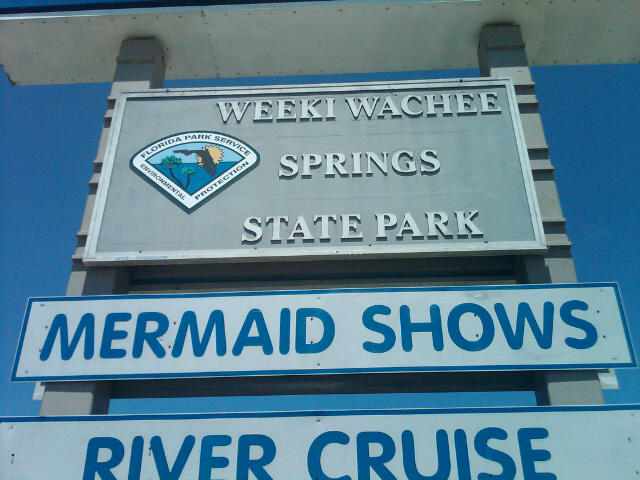
Weeki Wachee Springs State Park – A relict from the 1950s, Weeki Wachee Springs has no business being called a state park.
Werner – Boyce Salt Springs State Park – This unique patch of remnant Pasco County protects some ecologically important salt water springs along the Gulf of Mexico coast.
Ybor City Museum – Come here to learn about the robust history of the Cuban people and their settlement of the Tampa Bay region.

Florida State Parks - Southeast Region


Florida is blessed with one of the most extensive state park systems in the country. And, despite the presence of a criminal presently residing in the Governor’s mansion, it’s state parks are among the best managed nationally.

On moving to Florida in March 2008 I discovered that just like the National Park Service system, the Florida state parks system maintains a passport stamp program. Each state park has a stamp unique to it and if you slog your way through all of the parks in the system (currently 152 of them) and obtain a stamp for each one, you receive a complimentary front license place from the parks agency

Not all parks are able to maintain an active onsite staff (another of Governor Rick Scott’s many accomplishments) however passport stamps for those parks can be obtained at larger nearby parks.  For instance, the stamp for unmanned Cedar Key Scrub Preserve is obtained at nearby Cedar Key Museum.

The first state park I visited in Florida was Collier-Seminole in Collier County. There I purchased my first passport stamp book and after traveling around the state for a year I finished obtaining stamps for all of the parks at Big Lagoon State Park in Escambia County Not satisfied to leave it there, I purchased another passport stamp book and completed the second round of visits at Fort Zachary Taylor in Key West – at the exact opposite end of the state from Big Lagoon.

Not many people have completed one circuit of the state park system let alone two times. That day at Fort Zach I purchased a third passport stamp book and in June 2011 finished filling it out at Torreya State Park in the Panhandle.  Currently I am working on a fourth round of visits to each state park. When that’s completed I’ll do it a fifth time.

Because you can obtain stamps for the unmanned parks without actually visiting them, I decided during my third round of visits that I would go one step further in obtaining documentation of my visits.

This time around I began photographing the entrance sign for each of them.  Doing so turned into a challenge because places like unmanned Mound Key Archeological Site and St. Lucie Inlet Preserve require a boat ride or a kayak paddle to physically visit the site and obtain a photo. Likewise, Yellow Bluff Fort in Jacksonville doesn’t actually have an entrance sign – just a plaque on a slab of concrete announcing the presence of the park.

Not long ago I had obtained photographs for all but two of Florida’s 152 actively managed state parks (there are 14 others that do not have a passport stamp or public access or both).

The two missing photos were for Egmont Key State Preserve at the mouth of Tampa Bay and Anclote Key State Park offshore from Tarpon Springs.  I attempted to get a picture of Anclote in February 2012 but the ferry system used put me on South Anclote Bar where there were no signs.

On July 28, 2012 I took the ferry from Fort De Soto Park in Pinellas County over to Egmont Key. I had last been on this island in the mid-1990s when I accompanied the National Wildlife Refuge manager there.

All of Egmont is a National Wildlife Refuge but part of it is managed as a state park through a cooperative agreement. On this trip I wanted to visit the state managed area to see and photograph the sign.

That was accomplished easily on a brilliantly hot and bright July weekend afternoon.

Leaving Egmont Key for the mainland I was one park short of my goal – a picture of Anclote Key’s sign. Before making the 90 minute drive to Tarpon Springs where I planned to hire a boat for half a day to run out to the main island, I called Anclote Key to confirm the presence and location of a sign.

Imagine my surprise when I was informed that there is no sign for Anclote Key! Thus when I took the picture of the Egmont Key sign I had completed my quest and now have a photograph for all the actively managed parks that possess a sign (although the signs for Terra Ceia and Cockroach Bay are marginal in their acceptance as a park entrance sign).

To commemorate this accomplishment I am going to post my picture of each of the State Park signs.

With the picture comes a small blurb about the park – something unique or some experience I have had there in each of my visits.  This post deals with all of the State Parks in the Southeast Region of Florida.  From there I will continue to work my way through the rest of the state in a subsequent posts.
SOUTHEAST REGION
Avalon State Park – Not far north of Fort Pierce, this little coastal gem protects some important coastal habitats, the most important of which are areas where sea turtles can lumber ashore and deposit their eggs.
Bahia Honda State Park – Why people call this “Baya-Honda” state park instead of the correct “Ba-he-ah” Honda is a mystery. Situated just south of the 7-Mile Bridge in the central Keys, Bahia Honda preserves some exquisite beach habitats just 40 miles from the craziness of Key West.
Bill Baggs Cape Florida State Park – Just over the Rickenbacker Causeway from the insanity of downtown Miami, Bill Baggs is a magnet for unusual species of birds that make the trek over from the Bahamas. The only Bananaquit I have ever seen in the United States was hopping around in a causarina tree here one July day. There is also a way cool lighthouse here.
Curry Hammock State Park – West Indian hardwood hammock is the principal draw at this small island state park in the middle Keys.
Dagny Johnson Key Largo Hammock State Botanical Area – Protecting some of the rarest plant and animal species remaining in Florida this area of unique vegetation is co-managed with the Crocodile Lake National Wildlife Refuge.
Fort Pierce Inlet State Park – One of the surfer’s paradises of the east coast of Florida, Fort Pierce is a great place to see sharks of several species milling about offshore waiting for a tourist to make a stupid tourist move. I wish there were more sharks.
Fort Zachary Taylor State Park – The southernmost state park in Florida, Fort Zach preserves and interprets an important link in the military history of the Florida Keys. It is also a superb birding area with several highly sought after West Indian species seemingly regular here in spring migration.
Hugh Taylor Birch State Park – Just off Sunrise Boulevard in Fort Lauderdale, Hugh Taylor is used extensively and excessively by human recreationists. Despite that high level of use (or maybe because of it) vagrant bird species from the West Indies are regularly found here.
Indian Key Historic State Park – A short kayak paddle south of Mile Marker 78.5 on US Highway 1 in the Keys, Indian Key tells the interesting story of the first county seat of Dade County. It was a long time ago!
John D. MacArthur Beach State Park – Located in West Palm Beach, this is a location where it seems there are more nesting sea turtles than visiting humans at times. I like it like that.
John Pennekamp Coral Reef State Park – One of the signature parks in the Florida State Park system John Pennekamp protects the northernmost coral reef in the world. It was also the first underwater park in the world. John Pennekamp is a must-see on the itinerary of any naturalist headed down the Keys
John U Lloyd Beach State Park – Located in Dania Beach, not far from the Fort Lauderdale International Airport and the cruise ship port John Lloyd Beach is a very popular site for city dwellers to hang out on the beach. The last time I visited this park I was told by the underpaid ranger at the main gate to walk into the building on the opposite side of him to get my stamp. Parking my car and walking to the opposite door I was assaulted by a Florida Park Service employee who pushed me out the door yelling “Stay the fuck out of here”. He can go screw himself.
Jonathan Dickinson State Park – Located adjacent to Hobe Sound National Wildlife Refuge the complex of habitats protected here is among the most unique in the Florida State Park system.
Lignumvitae Key State Park – Only the most dedicated state park visitors come here. Reachable only by private boat or kayak (I guess you could swim from the US 1 bridge 1 mile away also) this little island in the stream protects a biologically interesting collection of Keys habitats.
Long Key State Park – In the Middle Keys, it seems the primary management objective of Long Key is to satisfy the needs of RV campers more than it is to protect habitat.
Oleta River State Park – Not far north of the bowels of the Miami Metro area, Oleta River allows visitors the opportunity to feel like they are in a wilderness setting even though they are surrounded by a zillion human beings.
St. Lucie Inlet Preserve State Park – This is another boat, kayak, or swim state park on Florida’s east coast. One advantage of going here is that when you return to the mainland you can slide over to the Square Grouper Tiki Bar where the video for Jimmy Buffett’s song “It’s Five O’Clock Somewhere” was filmed. At least that was a priority for me.
Savannas Preserve – This unique site protects the largest freshwater marsh on the southeast coast of Florida.
Seabranch Preserve – Not far from Stuart, Florida, and not far from the ocean, Seabranch Preserve protects a rare sand pine forest community that is now quite rare in Florida.
The Barnacle – One of the oldest homes in Miami and the Coconut Grove area, my visit to The Barnacle was marred by an exceedingly snotty Florida State Parks employee who should have left her bad day at home. She didn’t and instead treated me like a piece of dirt. I wrote to the park manager and complained. I never heard back.
Windley Key Fossil Reef Geological State Park – Windley Key was the source of fill material for the construction of the Henry Flagler’s “Overseas Railroad” that linked Key West to the mainland. The railway was obliterated by the September 1935 hurricane that destroyed so much of the upper keys. If you have an interest in geology you will enjoy this site. Take a lot of mosquito repellant with you when you go.