Sunday, May 3, 2020

Drinking Beer With Jimmy Buffett


A music tape holder with a white cover sat on a shelf in the wheelhouse of a 41-foot US Coast Guard patrol boat.  On the cover were the words “A1A” and the album’s authors name, Jimmy Buffett.  Until now my experience with Buffett had been his hit song “Margaritaville” played on rare occasions on the radio, and the performance of “Why Don’t We Get Drunk and Screw” by a cover band during intermission at a rodeo in Jamestown, North Dakota.  That lack of experience changed today as we slowly moved away from the Coast Guard Station Marathon dock bound for the Gulf Stream.  Our objective was to check boats for compliance with myriad Federal and state regulations, to look for bad guys running drugs, and for me to look for seabirds in the deep blue waters of the Stream.

My first visit to the Keys was in July 1984 while conducting research on Kirtland’s warbler. We wanted to put tiny radio transmitters on the backs of the birds and track their movements.  Before doing so we wanted to practice on a more widespread and more numerous species, and we wanted to do this in habitats and humidity similar to what we would occur a few months later in the West Indies. 

While working at the Florida Key Deer National Wildlife Refuge on Big Pine Key, I saw the Coast Guard station just up the Keys as an opportunity to get out on the open ocean to look for birds that live on the edge of the Gulf Stream.  A quick stop at Station Marathon one day confirmed that I could go along with the Coast Guard on their Saturday foray out into the Gulf Stream.

When I arrived at Station Marathon, I was given a quick briefing on how to keep from being thrown overboard if we encountered rough seas.  As we left the dock, Buffett’s song “Presents to Send You” was playing on the tape and by the time we reached the Seven Mile Bridge it had switched to “Stories We Could Tell.”  The music set the mood for the morning on the ocean and I was thankful the Coast Guard captain brought the tape with him.  Our laidback Keys Saturday morning changed rapidly, just as the song “Life is Just a Tire Swing” began, when we received a call instructing us to be on the lookout for a stolen boat.  Hearing this, the captain knew exactly where to look and we changed course for the Cuban Docks on Vaca Key.  Apparently if you are going to rip someone off and try to hide the boat afterward, the most logical place to try was the Cuban Docks.  The Captain switched off the tape, instructed his crew to prepare, and we started hunting boats.

We had a description of the boat but to me they all looked the same.  As we made our approach to the docks the Captain asked me to stand in the bow with my binoculars and read the registration numbers on the boast as we passed. This was exciting at first but soon it became boring.  That all changed when we came on to a thirty-foot shrimp boat because sitting in its wheel house was a simple, lone, unassuming marijuana plant growing in a bucket.  Not thinking much of it I casually mentioned to the Captain that there was a marijuana plant in that boat and was he interested in it? 

He took my binoculars, looked at the potted pot plant and exclaimed, “I’m going to seize that boat!” 

Our plans changed again when the pot plant was found.  We docked the Coast Guard vessel next to the shrimp boat and kept it under surveillance, then radioed the U.S. Customs Service and the Monroe County Sheriff’s Department to alert them to our find.  Both agencies said they would send backup.  This was followed by the rather dramatic laying on of guns.  Two of the four Coast Guardsmen were designated the boarding party.  It was their responsibility in these situations to board boats and look for contraband.  The boarding party strapped on their .45 caliber pistols and waited for Customs and the Sheriff to arrive.  In the mean time I stood with the other two Coast Guardsmen wondering what would happen next. 

Arrival of the reinforcements meant that the boarding party could jump into action and as they approached the shrimp boat, one of the two Coast Guardsmen still on the boat went below decks and came out carrying three 12- gauge shotguns.  He handed one shotgun to the boat Captain and then loaded a shell in the chamber of the second gun and kept it for himself.  He then turned to me.

“You’re a Fed, aren’t you?” he asked.

“Yes,” I said, “but I’m not in law enforcement.”

Thrusting the loaded shotgun in my hands he yelled “If they shoot, shoot back!”

With their guns drawn, the boarding party approached the shrimp boat.  As instructed, I stood in the bow of the boat with the shotgun aimed at the wheel house.  It was my responsibility to shoot if anyone shot first.  Between them the four-person boarding party had enough armaments to support a small insurgency in Nicaragua and as they made their way to the shrimp boat, I maintained my aim at the unseen doper inside.

With guns drawn the boarding party walked up to the main door of the shrimp boat and yelled at the occupants to come out.  Nobody inside moved.  They yelled again and still nobody moved.  At the conclusion of the third yelling session, one of the Coast Guardsmen on the boat kicked in the door.  I flicked off the safety on my shotgun.  The entire scene reminded me of a script for some surreal movie but it was real life and real time.

No shots rang out as the four men entered the shrimp boat to confiscate the lone marijuana plant in the wheel house.  After what seemed like an hour inside, they returned to the main door leading a rather disheveled individual who was shirtless and shoeless (this was the Florida Keys after all) man with scraggly hair.  His arms were securely behind his back and his wrists were held together by hand cuffs.  The Customs Agent yelled at us and told us they had found some cocaine on the table along with the malevolent marijuana plant.  He also informed us that we could take down our arms and prepare to tie off the boat.

With the boat shrimp boat secured to the Coast Guard vessel, we slowly made our way back to Coast Guard Station Marathon where it was tied off and guarded by another Coast Guardsman who proceeded to do about face marches in front of the boat.  It was his responsibility to ensure that nobody came near that shrimp boat unless they were personally known to the Coast Guardsman.  Should some nefarious individual attempt to board the boat before the Customs Service could tear it apart, it was this Coast Guardsman’s responsibility to shoot that person. 

Agents of the Drug Enforcement Agency along with Customs and the Coast Guard began tearing apart the interior of the boat.  In the kitchen area they removed an interior wall and discovered between it and the hull, numerous packages of cocaine. Lots of cocaine.  The Captain of that vessel sensed something I couldn’t perceive and knew there was more than a single marijuana plant onboard.

The shrimp boat incident at the Cuban Docks severely cut into our time on the ocean but the Coast Guard had made a promise to me that they would get me offshore to look for birds.  After finishing our paperwork and interviews we again left the dock headed for the open ocean.  As we passed under Seven Mile Bridge, we received a call from Marathon but instead of telling us to go back to the Cuban Docks to look for another boat, it was Coast Guard Station Marathon wishing us a successful trip.

The water was a little rough when we returned to the ocean but the Captain was undeterred.  With the A1A tape blaring over the hum of the engines, he explained that the best possible duty station for him was the Florida Keys. 

“I knew I wanted to be here the first time I saw Jimmy Buffett in concert,” he said.  His tour in the Keys was quickly coming to an end and he said he knew already he was going to miss it.

“Where are you going next?” I asked.

“Kodiak, Alaska,” he said.

I mentioned the obvious, that Kodiak was an awful long way, in the wrong direction, from the Florida Keys and the Captain agreed.  “I’ll just take my Buffett tapes with me and they will keep me warm.”

I hadn’t thought much about Buffett until that day but after hearing the A1A album, named in part for the Keys Highway, all day long that Saturday, I was starting to get hooked.  I especially liked his song “Migration.”  It contains the verse, “Now most of the people who retire in Florida are wrinkled and they lean on a crutch.  And mobile homes are smothering my Keys, I hate those bastards so much.”  I hadn’t been in the Keys long but already I was becoming annoyed by development and I was beginning to look at mobile homes with the same disdain Buffett had.  I was beginning to like this guy.

Two days later in a music store in Key West I purchased the tape of every Buffett album they had in stock and soon I was listening to nothing buy Buffett.  I took those tapes with me when I was in the Bahamas and the Turks and Caicos Islands, and quickly realized that what Buffett sang about in “Margaritaville”, a place where your most difficult task was searching for a lost shaker of salt, was exactly how I wanted to live my life.  I wanted to live that life style and wanted to live it now.  The only problem was I was more than 20 years from retirement, I had mountains of child support to pay on top of other bills laid on me by a benevolent judge in the Stutsman County divorce court in North Dakota.  I needed to stay working or wind up in jail.  Perhaps the easiest way to live a Buffett lifestyle until I could retire was to do so through his music. 

Some years later while stationed in Nebraska, I began writing letters to Buffett hoping to get him engaged in environmental issues on the Platte River.  Nothing could help our cause more than to have a famous singer of his caliber as a spokesperson for the river and its cranes.  Then I made my first trip to Cuba and sent my trip report to him because of his apparent love for the island from everything he said in his songs. After maybe five or six letters to him, I finally received a reply and it was because of the Cuba trip.  While there I saw a species related to the American robin called the Cuban solitaire.  Jimmy wanted to know if that was a bird people could see in the harbor in Havana.  I wrote back and said it wasn’t.  Jimmy wrote back again and explained that he was writing a book (“Where is Joe Merchant?”) that would include a scene where a pilot was headed to Alaska and passed over the Platte River during the peak of sandhill crane migration.  He wanted to know what the area would look like to a pilot so he could put that in his book. 

I sent him several papers I had published about sandhill cranes and also sent him a short movie produced by the Platte River Whooping Crane Trust.  It contained several minutes of video of huge flocks of cranes flying to and from the river at sunrise and sunset and that video would give him a sense for what the area was like with the sky covered in cranes.  A month or so later I received another letter.  This one contained part of a chapter from Where is Joe Merchant.  Jimmy was asking if I would read it for biological accuracy. 

One week after arriving in the Keys I was in Buffett’s office on Fleming Street in Key West.  I went there to interview his business manager, Sunshine Smith, as part of my research about attitudes toward the Fish and Wildlife Service in the Florida Keys.  Hanging on the wall next to where I sat was a picture of Buffett with some fans and I casually mentioned to Sunshine, “One day I am going to have my picture taken with him.”

She smiled and asked “Did you know Jimmy is holding a benefit concert this Saturday in Fort Lauderdale?”

I didn’t.

She said, “The show is sold out but I think I can get you tickets.”  I was then given directions to the venue and told where to go to find my tickets when we arrived.

With typical crazy South Florida traffic, it took Jon and me nearly four hours to drive from Big Pine Key to the Sunrise Amphitheater on East Sunrise Boulevard in Fort Lauderdale.  We found it despite heavy rush hour traffic, parked our car, dressed in our Buffett concert garb, and entered through the main entrance.  Signs pointed us to Will Call and there we picked up our tickets.  Attached to the two concert tickets were two other tickets.

“What are these?” I asked.

“Oh, those are backstage passes to meet Mr. Buffett.”

We found Sunshine Smith, gave her the passes and she brought us in through a rear entrance on the side of the concert hall.  There, sitting on stage, was Jimmy Buffett tuning his guitar.  We waited where Sunshine told us to stay while she went on stage.  She bent over Jimmy and said, “Jimmy, your ornithologist is here.” 

Buffett said “What?  Craig Faanes is here?”

He  put down his guitar, jumped off the stage and walked toward Jon and me.  Reaching us he stuck out his hand and said “Hi, I’m Jimmy Buffett”

Like I didn’t know that?

He then commented that we were appropriately dressed for the occasion.  As I shook his hand I said “You know Jimmy, this is the first time in my life I have ever been speechless.”  A quizzical look crossed his face as he said, “Speechless? The way you write letters how in hell can you be speechless?  Let’s go have a beer.”

Accompanying him behind the stage we went into a large room where a huge spread of food was laid out and next to it a cooler full of beer.  Jimmy reached into the cooler, took out three bottles of Corona and opened each one.  He handed one to Jon, one to me, and then took a seat.  We spent the next thirty minutes alone with Jimmy talking about politics (he’s a screaming liberal), bone fishing in the Bahamas, his music, where he gets the ideas for his songs (by watching people), and the general decline in the health of the human environment.

Nearing time for him to go on stage I mentioned that of all his songs, “Migration” from the A1A album, that I first heard that day on the Coast Guard vessel from Coast Guard Station Marathon, was my all-time most favorite song.  I added that despite seeing him in concert about 15 times at this point I had never heard him sing it in concert.  We shook hands and thanked him for the experience, then left for the concert hall.

Our seats were dead center, two rows back from the stage.  We could have spit and hit Buffett had we wanted.  We were that close.   When he took the stage to a tumultuous uproar, he thanked everyone for coming, explained the purpose of this fundraising concert was to kick start an effort of his to protect West Indian manatees in Florida, and then began singing his first song.  It was “Migration.”  When he finished, he looked straight at me, gave me a thumbs up, and then moved on to his second song. 

For more than twenty years the US Fish and Wildlife Service had been doing battle with the Florida Department of Transportation about reducing the speed limit from 45 miles per hour to 35 miles per hour where US Highway 1 crosses Big Pine Key.  Our concern through all of those years, was the large number of Key deer that were being killed by collisions with vehicles on US 1.  We reasoned that if the speed limit was reduced, the deer would be less likely to be killed in collisions, especially at night.  Our argument made perfect sense but it fell on increasingly deaf ears in the Florida Department of Transportation office in Tallahassee.

That was until we sat backstage with Jimmy Buffett at a manatee concert on Sunrise Boulevard in Fort Lauderdale.  After the concert we composed a letter to Buffett and typed it on Fish and Wildlife Service letterhead.  We laid out the issue with speed limits, with the lack of response from the Department of Transportation and wondered, since he had done public service announcements for the refuge, if he could do one more thing to protect its resources.  Could Jimmy contact the Department of Transportation and ask them to reduce the speed limit to 35 miles per hour on Big Pine Key?

We sent the letter and anxiously waited for a reply.  A written one never arrived but about two weeks after writing to Buffett, the Assistant Manager of the refuge excitedly ran into the office to report that the Florida Department of Transportation was out on US Highway 1 right now changing all of the speed limit signs from 45 miles per hour to 35 miles per hour.  The impetus for this change in heart on the part of Transportation was unknown but we had our suspicions.

Doing some sleuthing we discovered that Buffett had received our letter and called his friend Lawton Chiles, the Democratic governor of Florida with whom Jimmy had done several projects for the protection of Florida’s environment.  He asked the Governor if he could possibly change the speed limit to protect those deer on Big Pine Key from certain death at the hand of speeding drivers.

Lawton Chiles received the letter in the morning.  By noon he had signed a gubernatorial decree declaring that the speed limit on US Highway 1 as it passed through the entire length of Big Pine Key shall not exceed 35 miles per hour.  A courier took the decree from the Governor’s office over to the Director of the Department of Transportation and by late afternoon crews were reducing the speed limit to protect the deer.

The US Fish and Wildlife Service had tried unsuccessfully for 20 years to have the speed limit reduced.  It took Jimmy Buffett two weeks to make it happen.  Some purists will argue that it’s not fair when someone with power or influence moves mountains and makes things happen and that is partially true.  If I can accomplish something that protects natural resources by contacting someone famous and well-connected, I will do that in a flash rather than worry about appearances.  So, too, will everyone else who cares.

Friday, May 1, 2020

Chilling With Our Special Agent


My father was a full-fledged bigot.  It wasn’t a malicious act on his part.  He wasn’t the kind of bigot you would find under a hood at a Ku Klux Klan rally, or was he one you would find running for the US Congress as a Republican from Tennessee.  To be honest, he was a Democrat.  He grew up on a small farm in the southwest corner of Barron County, Wisconsin, and had no contact with black people until the Second World War.  During that war, the Army thought my father’s talents would be best used guarding German prisoners of war and he was stationed at Camp Polk (now Fort Polk) near Alexandria, Louisiana.  Through interaction with practicing bigots from the southern United States also stationed at Camp Polk, my father developed a fine-tuned level of bigotry.

As a child I often remember him watching television referring to black people as “niggers”, or “jigaboo” or a “jungle bunny.”  Once when I was about 10 years old, we rode with a friend to the Twin Cities to watch a Minnesota Twins baseball game.  In downtown Minneapolis as we passed the famous Leamington Hotel, we saw a black doorman standing next to the curb.  My father, seated in the right front passenger seat, casually rolled down his window and yelled at this man “Hey Rastas, how you doing?”  Not knowing any better since he was the model I grew up with, I laughed as hard as my father and his friend as the man turned and walked away.

I carried my father’s level of bigotry with me as I grew older.  My senior year in high school we had a black girl from South Africa as an exchange student.  She was probably the only black person in all of Barron County and maybe everywhere north of Eau Claire.  We instantly ostracized her not because of anything she had done or said, but simply because she was black.  The collective heritage of many of us demanded that she be treated like a pariah, and we went out of our way to make her feel unwelcomed. Sadly, we succeeded.

The first black person I ever talked to was actually four black guys sitting in a dorm room of Johnson Hall the first week of college as a freshman.  Freshly arrived and wide-eyed, I became friends with a kid from Tomah named Chris.  I thought he was in room 214 and when I went to his room to talk with him, I entered without knocking and found four black men sitting on the two beds and the two chairs having a normal conversation.  Chris was in room 216.  Seeing them, I instantly stopped in my tracks and felt my eyes widen like saucers.  I was fearful that they would attack me because, after all, they were niggers and all my life my father told me that’s what niggers do.

Gary Gray, a sociology major, sensed my fear and said “Hi, come on in. We won’t hurt you.” I had no reason to believe him but I followed his advice, entered the room, and stood there.  If it was necessary, I could bolt for the door and save myself in an emergency.  I wasn’t taking any chances.  Gary very politely introduced me to the three other guys.  I now forget the name of two of them but the third guy was A.J. Wilson.  “Just call me Apple Juice,” he said.

Gary asked where I was from and I told him Rice Lake, Wisconsin.

“Rice Lake?  We beat your ass in the state championship finals in ’61,” Gary gloated.

He was right.  Rice Lake lost the state high school basketball championship in 1961 to Milwaukee Lincoln High School.  Lincoln was then the perennial number one power house high school basketball team in Wisconsin.  We lost to them in overtime. Milwaukee Lincoln ended the season with a 25-1 record; Rice Lake ended theirs 24-1.  They were undefeated going into the finals.  The “1” for Rice Lake was at the hands of Milwaukee Lincoln.  All four guys sitting with me knew that, and for the next hour reminded me over and over again that Lincoln won and Rice Lake lost but I was still a nice person despite where I went to school.

The banter quickly caused the considerable tension in the room to erode and after an hour of it I found myself not talking to four black guys, but to four high school basketball fans from Milwaukee.  It was one of many epiphanies I experienced in college.  It was one of the best I ever experienced.

Cleveland Vaughn grew up in a little town in central Arkansas.  His experience as a child was considerably different than mine.  Where I looked at black people as “niggers”, Cleveland was called one nearly every day.  Where I was watching black people being treated like chattel on news broadcasts from far away in Alabama, Cleveland was one of those black people.  In school we were told about segregation and studied it a bit in social studies classes.  For Cleveland, he lived with “Whites Only” bathrooms, “Whites Only” drinking fountains, and wasn’t allowed to enter restaurants because of the color of his skin.  Once in an story about him in the Omaha World-Herald, Cleveland lamented the fact that “everything was segregated” where he grew up.   If anyone I knew had a right to be angry it was Cleveland Vaughn, the US Fish and Wildlife Service Special Agent assigned to Nebraska.  He was anything but angry; quite the opposite.


Cleveland Vaughn. My best friend in Nebraska who loved the Platte River almost as much as I do

I met him when he arrived in our office when he traveled to Grand Island to keep an eye on a whooping crane that had stopped on the Platte River.  This was the first one where we changed the policy and let the media know about the bird before we let law enforcement.  Explaining my background to him, I mentioned that when I was with the Wisconsin Department of Natural Resources, I took a 320-hour law enforcement training course that qualified me to carry game warden arrest authority in the Cheesehead State.  I mentioned helping Jerry Cegelski, a mountain of a man who was the Special Agent in Wisconsin, identify ducks harvested by hunters along the Mississippi River.  Also in my repertoire was the famous canvasback duck case that earned Gene McCarthy a Special Achievement Award and a cash bonus.

“You’re the guy who got that award for Gene?” Cleveland asked.

“That was me.  I was in graduate school.  I took the duck away from the hunter, called Gene, who cited him over the phone. I sat on the witness stand in District Court in St. Paul and then met Bob Hodgins afterward.  Bob helped me get my first job with the Service.”

“You were picking in tall cotton,” Cleveland said with a toothy grin, “if you were hanging out with Bob Hodgins.”

My major professor in graduate school received his PhD from Oklahoma State University where he studied red-winged blackbird concentrations on several National Wildlife Refuges in the Sooner State.  There he met several Special Agents who were called “Game Management Agents” at the time.  Later he was a researcher at a field station of the Patuxent Wildlife Research Center where he had more exposure to Special Agents.  Once in a wildlife biology class he told the students, “You don’t ever want to mess with a Game Management Agent.  Those people will arrest their own mother if she breaks the law.”

I quickly learned that Cleveland would also and we bonded almost instantly.

He admitted that he was not the most proficient person when it came to identifying birds and asked if I would be interested in riding with hm on investigations to help him.  A few years earlier he lost a case in Federal Court when he wrote on the citation that the hunter had illegally harvested a “Redheaded Duck.”  It was true the hunter had illegally shot the bird but its correct name was “Redhead.”  Cleveland botched the citation, the hunter’s attorney used the American Ornithologists Union Checklist of North American Birds to prove to the court there was no such species as a Redheaded Duck so it was impossible for his client to have shot one, illegally or otherwise.  The case was thrown out and Cleveland had considerable egg on his face.  He asked for my assistance so that would not happen again. 

My first summer in Nebraska we had an issue on the Platte River with endangered least terns and piping plovers nesting on sandbars in the channel and operators of ATV’s running up and down the channel potentially harming the birds or destroying their nests.  John Sidle and I marked the boundaries of every nesting location in the central Platte River, marked off the edge of the area with bailing wire, and posted signs informing ATV users of the presence of the endangered birds and that it was illegal to harm them.  Cleveland and I spent nearly every weekend that summer patrolling the river channel protecting the birds from humans.  

Our friendship grew as the summer progressed. It grew to the point where we felt comfortable chiding each other about our race.  Those kinds of comments would have instantly resulted in someone being charged with racial discrimination but between friends it was acceptable.   One Saturday when we approached the river near Kearney, the sun was particularly bright and I lathered on sun tan lotion.  As I did, a quizzical look crossed Cleveland’s face.

“You know what I don’t understand about white people?”

“What’s that?”

“You give me shit about being black, and then spend all summer trying to get as black as I am.”

Another time, driving on South Locust Avenue in Grand Island in the late summer we saw a large wagon filled with watermelons along the side of the road.  Immediately preying on the stereotype, I asked Cleveland, “Do you get an erection when you see that many watermelon’s in a single place?”

He responded, “Do you want me to arrest you right now?”

We had that kind of friendship.

The Migratory Bird Treaty Act is a strict liability law wherein it is not necessary to prove intent to have a violation.  If a bird flies into a power line and kills itself, the company operating the power line is liable under the Act for “taking” a protected species.  In Nebraska we had an increasing problem with hawks being electrocuted on small power lines in the western part of the state and other birds colliding with power lines and dying from impact trauma.  Each time a hawk fried itself or a sandhill crane broke its neck flying into a power line, Cleveland could, under the law, cite the CEO of the company operating those power lines. 

Nebraska was lucky in those days to not only have a high energy Special Agent but also have a United States Attorney who loved birds and who was passionate about sandhill cranes.  Ron Lahners, a George H.W. Bush appointee, was the United States Attorney for Nebraska and he took particular interest in the Migratory Bird Treaty Act and especially people who were killing “his” sandhill cranes.

To resolve the power line issue, Cleveland and I organized a seminar for power companies in Nebraska to explain to them their legal responsibility under the Migratory Bird Treaty Act.  We also gave them some alternatives to follow to reduce or eliminate bird mortality.   The seminar was held at the Midtown Holiday Inn in Grand Island, and a representative of every Nebraska power company no matter how large or small, sat in the audience. So, too, did Ron Lahners.

I began the seminar with an overview of the Migratory Bird Treaty Act and recited several pieces of case law that were the precedents for the power companies being liable whenever a bird died at their power line.   Cleveland followed me by introducing himself and went straight for the jugular.

“Good morning.  I am Cleveland Vaugh, the US Fish and Wildlife Service Special Agent for Nebraska.  I arrest people.  I don’t like doing it but when I have to I do it.  If I find you or your company in violation of our laws about taking birds, I will arrest you.”

Every CEO in the room sat in silence.

Cleveland then added while pointing at Ron Lahners, “When I arrest you, your next stop will be in Court sitting in front of the United States Attorney Ron Lahners who loves to prosecute people who I arrest.”  Finishing his presentation, he said, “Our next speaker is Ron Lahners, the US Attorney for Nebraska.”

Ron stepped to the podium, cleared his throat, and said matter of factly that birds and especially sandhill cranes were a precious natural resource that he took a personal interest in protecting.

“How many of you have been in the Louvre Museum in Paris?”

Several people raised their hand.

“And how many of you saw the Mona Lisa when you were there?”

The same people raised their hand.

“The Mona Lisa is an irreplaceable public resource to be protected at all costs.”

Ron then added, “To me every bird in this state is the Mona Lisa and I will prosecute you for harming them just like I would if you harmed the Mona Lisa.”

Yes, their techniques were a little direct but no they were not bluffing.  After the meeting we were overwhelmed with requests for assistance from the power companies at the seminar. A small company in the Nebraska Panhandle wanted to revamp its entire distribution system including making each power pole safe for hawks to land on and not be electrocuted.  They sent us the blueprints for the entire system and but didn’t ask for our advice on the design.  They asked our permission to proceed with the project.  That happened because of Cleveland Vaughn.

The Nebraska Department of Roads applied for a permit from the US Army Corps of Engineers to replace a large bridge over the Middle Loup River during the peak of the bird nesting season.  The bridge was known to support more than 200 nests of cliff swallow and barn swallow. Destruction of each nest on that bridge would be a violation of the Migratory Bird Treaty Act as would destruction of each egg. With an average clutch size of five eggs, there was a potential for more than 1,000 violations of the Act from lost eggs and 200 more from lost nests. Through the consultation process, we informed the Department of Roads that they would be in violation of the Act if they destroyed the nests or eggs.  As an alternative we asked them to put off replacement until August after the birds finished nesting.  The Department of Roads was adamant that the bridge must be replaced now and they set a date of June 10 to begin construction.

Sunrise on June 10 found Cleveland Vaughn and me sitting in his car waiting for someone to arrive.  Not long after the sun peeked over the horizon, a pick up truck from the contractor chosen to replace the bridge arrived and with him there were soon more three more trucks.  Next was a large semi with a backhoe on it and another with a bulldozer.  They were ready to get to work.

Waiting until most of the people he expected to arrive were on the scene, Cleveland opened his car door, exited, and walked up to the man whom he assumed was the project foreman.  He flashed his gold badge in the man’s face, identified himself, and then asked what he was doing.  The foreman explained the project and Cleveland explained the facts about the birds.

“The first member of your crew to touch a nest will be arrested.  I will continue to arrest people until everyone of you is under arrest.  I will then arrest the owner of your company, and if that is not enough then I will go to Lincoln and arrest the Director of the Department of Roads.” 

For added emphasis, he asked the now visibly shaken foreman, “Do I make myself clear?”

Rather than respond, the foreman activated the CB radio in his car, contacted his boss and explained what was about to happen.  The boss called the Department of Roads in Lincoln and the next time his crew was seen at the bridge was on August 1 after all the birds had left their nests.

Waterfowl hunters referred to Cleveland as “the Black Lab”.  We referred to him as “the Black Death.”  He always gave waterfowl hunters the benefit of the doubt unless they failed “the Attitude Test.”  If a violator showed an attitude that was the end of any hope for leniency.  Consider a hunter we found parked illegally on a Waterfowl Production Area in the Rainwater Basins.  It was legal for the hunter to be there but not for him to take down the fence, drive onto the Federal land, and park.   We found the hunter’s truck, parked beside it, and waited.  Soon the hunter returned and Cleveland motioned him to come to our car.

While sitting in the car with his window down, Cleveland asked for the man’s hunting license as he explained the violation he had made.  While Cleveland held the license writing down information from it, the hunter reached in, yanked the license from Cleveland’s hand and announced “that’s mine.”

In a flash, Cleveland had his car door open, and his left hand on the hunter’s throat.  He lifted the hunter off the ground and with the index finger of his right hand wagging in the hunters face exclaimed, “don’t you EVER take a license out of my hand again. EVER!!  Have I made myself perfectly clear?”

“Yes, sir.  Yes sir. Yes sir.”

Three low life’s living in a trailer near the lower Platte River went out on their ATV one day and drove through a colony of least terns nesting on a river sandbar.  The least tern is protected by the Endangered Species Act and on the advice of the US Attorney we marked the boundary of the nesting sandbar with very obvious signs announcing the presence of the birds.  That did not stop these knuckleheads who purposefully drove from nest to nest smashing the three eggs in each nest.  Cleveland investigated and found out who had committed the crime.  He called and asked if I wanted to come along when he took them down.

The three culprits each had a police record, two had a prison record and one was known to illegally carry a concealed weapon.  Although I did not have law enforcement authority, I went along with my .357 magnum side arm and as backup we were accompanied by two heavily armed FBI agents from Omaha.  As we drove up to the trailer Cleveland laid out the plan.

“When we go in, you go in first,” he said to me.

“I go in first? Why in hell do I go in first?”

“Because if they shoot, I want them to shoot your white ass before they shoot my black ass.”

No shots were fired as Cleveland took each of them into custody.  Ron Lahners later prosecuted them and each was sentenced to a fine and a jail term.  They were also sentenced to community service which required them for the next three summers to stand by boat ramps on the lower Platte River handing out information about least terns to anyone on an ATV.

Cleveland had many successes during his career but there was one major screw up that made him famous.  Black-billed magpies are protected by the Migratory Bird Treaty Act and it is a violation of the Act to possess one unless you have a permit.  A couple in Red Cloud, Nebraska had owned a magpie named Joe for 16 years and a local newspaper did a story about their pet magpie.  Locals saw the story and called Cleveland who now was faced with a huge dilemma.  The owners were clearly in violation of the Act but they had possessed the bird for 16 years.  It was obvious there was no malice involved but there was the public perception.  Plus, Cleveland had to do something or face pressure from the public for having two standards for law enforcement.  Cleveland drove to Red Cloud, seized Joe the Magpie, and cited his owners under the Migratory Bird Treaty Act.

The local paper in Red Cloud covered the story first, followed by the Omaha World-Herald.  Soon every newspaper in the state and most of the television stations were covering this drama that eventually made national news.  The less than reputable National Enquirer sensationalized the story portraying Cleveland like he was one of Hitler’s right-hand men.  The Enquirer story caused one of its readers to write to Cleveland saying, “I was in Vietnam and you are worse than Charlie, motherfucker.”  “Charlie” was the Viet Cong.

Eventually both US Senators from Nebraska became involved and Joe the Magpie was returned to Red Cloud, Nebraska where he lived out his days.  Afterward whenever you wanted to pester Cleveland all you had to do was say “Hey, Joe.”

Cleveland ended his law enforcement career as the United States Marshal for Nebraska.  When Bill Clinton was elected, Cleveland said he wanted to be the Marshal.  It involved writing an essay and he asked me to write it for him.  In it I made Cleveland sound like he walked on water. His application was evaluated against twenty other applicants then the new Clinton Administration made him “Marshal Vaughn.”  When he received word, he called our office in Grand Island to inform us.  Nancy Nichols took the call while we were in a staff meeting.  Almost doubled over with laughter when she returned, she said “The Black Death is now the US Marshal for Nebraska!”  I told her, “The next time I see him, I’m going to start limping like Chester on “Gunsmoke” and call him “Marshal Vaughn, Marshal Vaughn.”

I moved from Nebraska to California a month later and never again saw Cleveland.  In 2016 at the age of 72 years old he developed stomach cancer and was dead four months later.  When I learned of his death I was overwhelmed with sadness and melancholy.  Now, living in Florida, I think of Cleveland every time I put on sun tan lotion as I try to become as black as he was.

Monday, April 27, 2020

When Audubon Fired Rich Madson

The Garrison Diversion Project, once heralded as the savior of North Dakota, is a multi-billion dollar water development boondoggle that the National Audubon Society once claimed it would go to no ends to kill. Eventually they saved the project in Congress and walked away with egg on their face


A large, hideous, highway sign blotted out the view from Interstate 94 just a mile or so past the exit to Cleveland, North Dakota.  It faced east toward the rising sun and even the least aware among us could not avoid seeing it.  On the sign was painted a babbling brook best suited for a mountain scene in Montana where Norman McLean and his family could have fished for trout in the iconic tale A River Runs Through It.   Above the painting of the babbling brook, in black letters were the words “GARRISON DIVERSION”.  Below the babbling brook, in slightly smaller font, were the words “The Lifeline to Our Future.”  Uninformed passersby were probably left with the feeling that Garrison Diversion, whatever it was, likely carried the weight of the entire future of North Dakota on its shoulders.   Nothing could be farther from the truth.

The sign’s mere presence caused me heartburn each time I had to drive by it.  Not only were the words on the sign, and the picture of the babbling brook, bald-faced lies, the sign’s message sent the public the uninformed impression that Garrison Diversion was a good thing.  Over several years, fellow staff members of the Northern Prairie Wildlife Research Center, and members of local conservation groups, hatched plan after plan after plan for how the Garrison sign could be removed from the landscape. 

Following several years of “I think we should….” conversations someone finally did. 

Driving west past the Cleveland exit I approached the shelterbelt that was to the east of the sign and as I had done so many times before, prepared myself to be insulted by the sign.  This time, however, all I saw at the west end of the shelterbelt was an unobstructed view of a wheat field.  The sign, with its horrific message, was gone!  Three wooden posts that held up the sign were there but the sign was missing.  Immediately stopping my car, I raced to the side of the road to investigate.  As I suspected from the highway, the support posts had each been decapitated.  It was apparent that someone with a chain saw had cut through the posts at the same angle and felled the sign.

The sign itself was lying face first in the ditch with its misleading message seen only by the grasses laying squashed under its weight.  Investigating farther, I saw fresh tire tracks in the trail leading from a township road to where the sign had been and from the tire tracks, I saw the footprints of one human obviously on a mission to walk from a vehicle to the sign.  Little piles of sawdust lay at the foot of each beheaded support post but there were no other clues about the identity of the patriot who finally took out that sign.  It was one of the happiest days of the year for me knowing that god-awful sign was gone.

The sign’s demise was the topic of discussion over coffee at the research center the next day.  None of my colleagues accepted responsibility however one person, who I still suspect, participated at a very low-key level in the bantering about what happened to the sign and who had bragging rights for its demise.  Most of us hoped that the destruction of the sign was a metaphor for the destruction of the project.  Unfortunately for us and for North Dakota’s natural resources it was anything but the end of it.

On December 22, 1944, Congress authorized the Flood Control Act, later named the Pick-Sloan Missouri Basin Program. The primary purpose was for flood control, navigation, irrigation and hydropower, which would be facilitated by the construction of six main stem dams on the Missouri River at Fort Peck, Garrison, Oahe, Big Bend, Fort Randall and Gavin’s Point.

North Dakota was promised over a million acres of irrigation as compensation for the 300,000 acres of farmland lost to the permanent flood created as a result of the dams and the lost economic benefit that farmland generated. The state was originally to receive this irrigation from water diverted from Fort Peck Dam in eastern Montana. Initially known as the “Missouri-Souris Project,” it included 1,275,000 acres.

Between 1944 and 1965, soil surveys and studies were performed to assess the feasibility of irrigating the 1.2 million acres originally planned for North Dakota. The studies indicated that the soil in northwestern North Dakota was not suitable for irrigation according to federal irrigation standards. Drainage problems caused by the unusually high density of glacial subsoil were a primary factor. As a result, the Bureau of Reclamation revised the diversion plan proposing instead to take water from the Garrison Dam and reservoir to irrigate other lands to the east. With the new name “Garrison Diversion,” the Bureau of Reclamation 1957 feasibility study on the redesigned project recommended irrigation of 1,007,000 acres and other water development in central and eastern North Dakota.

Because of changes to the original plan and the language in the 1964 appropriations act requiring specific reauthorization for all units of the Pick-Sloan Missouri Basin Program, the Bureau of Reclamation returned to Congress for reauthorization. During the process of reauthorization, supporters of the project pointed to the many benefits for North Dakota and the need to compensate the state for land inundated by the construction of the Garrison Dam and reservoir. On August 5, 1965, Congress addressed concerns of the project—the high cost, conflict with federal farm policies and the small amount of money to be repaid by water users—by enacting legislation for the Garrison Diversion Unit. The primary focus of the plan was to include municipal and industrial water, fish and wildlife development, recreation and flood control along with irrigation of 250,000 acres. Soon after, August 5 was declared “Liberation Day” in North Dakota and almost became a state holiday.   It was liberation day because from that day forward the Garrison Diversion Project would be constructed and agriculture in the state would be able to flourish.  As now envisioned, Garrison would provide irrigation waters to 6/10th of one percent of the agricultural acreage of the state.  That’s hardly enough to “flourish” and if you put enough lipstick on a pig it’s still a pig.

To make North Dakota flourish was going to come at a horrific environmental cost including the construction of several dams, damage or destruction to nearly 20 National Wildlife Refuges, drainage of thousands of acres of wetlands, and the conversion of more native prairie to produce wheat that would be flourished by the irrigation waters. Promoted heavily by Senator Milton R. Young, it soon became his baby and no politician in the state stood a chance of surviving any election unless they ate, slept, and shat Garrison Diversion.

The environmental damage to be brought on by Garrison was mindboggling and the US Fish and Wildlife Service went to war with its sister agency the US Bureau of Reclamation that had Federal responsibility for the project’s construction.  There was a very good reason our nickname for the Bureau of Reclamation was “the Bureau of Wreck-the-Nation.”  They weren’t wrecking the entire nation with Garrison, only North Dakota, 

Gary Pearson a veterinarian at the Northern Prairie Wildlife Research Center became a vocal opponent of the project.  Gary was and remains steadfastly meticulous in everything he says and does.  He kept notes of meetings and every newspaper clipping about every aspect of the project. His knowledge of project features plus his photographic memory of everything everyone said eventually became his downfall.   Fed up with Gary’s factual statements at public hearings and elsewhere, eventually Senator Milton R. Young whom we referred to simply as “Senator Wheat” arranged for Gary to be removed from Federal service.

Senator Wheat was the consummate politician who complained about the budget unless it was money earmarked for his state. Then budgets didn’t matter.  Consider the US Coast Guard navigation tower constructed in LaMoure, North Dakota, a mere 300 miles from the nearest Coast Guard cutter in the waters of Lake Superior in Duluth, Minnesota, it was constructed in the Senator’s home town.  Who could ever forget his multi-billion-dollar anti-ballistic missile site constructed near Nakoma in northeastern North Dakota?  Costing nearly $2 billion to construct, and after an elaborate gala ribbon cutting ceremony in which the assembled masses were assured that this monstrosity would keep them safe from any incoming Russian missiles, the Mikkelsen site at Nakoma was decommissioned after a month and it never operated.  It was decommissioned because no funds were authorized to operate it. Senator Wheat didn’t care.  He brought $2 billion into North Dakota for construction of this wasted project.  Now forty years later it sits collecting mold surrounded by endless sugar beet fields and never once did it protect us from anything!  Senator Wheat wanted it and Senator Wheat got it and that is all that mattered.

Garrison had become the cause celebre for the National Audubon Society.  Page after page of the Audubon magazine were devoted to stories about Garrison and pep talk descriptions about how Audubon was never going to the let the project be built.  Sitting in their ivory tower at 950 Third Avenue in New York City, Audubon was effective lobbying Congress but needed to be on the ground in North Dakota to bring change.  Ed Brigham, a quiet gentleman who was the Regional Vice-President in Minneapolis first tackled the project but I think it overwhelmed him.  In his place, Audubon hired Richard Madson as the new Regional Vice-President and they placed him at ground zero in Jamestown, North Dakota. 

Rich had a razor-sharp wit and a memory almost as photographic as Gary Pearson.  A wildlife biology student at South Dakota State University, Rich never received his degree because of a conflict of conscious.  During a final exam for a course that would determine his graduation, Rich caught a fellow classmate cheating.  Aware of the cheating he pointed it out to the professor and said it was not fair to Rich or any of the other students that their grade would be determined by a curve that included the cheater’s grade.  The professor refused to take any action and let the cheating student continue with his exam.  Incensed, Rich quit the class just four credits from a degree in wildlife biology.  His ethics wouldn’t let him play the game and he didn’t want his name associated with a degree or a school that would allow his ethics to be compromised.

Rich Madson spent a great deal of time lobbying members of Congress to develop opposition to Garrison.  He was instrumental in getting a Garrison opponent, a farmer from Ypsilanti, North Dakota named Darwin Fisher, elected to the Board of Directors of the Garrison Diversion Conservancy District.  He was also instrumental in getting Wade Williams, a young farmer from rural Jamestown and a vocal Garrison opponent, elected to the North Dakota state legislature.  Both were positions nobody ever imagined would be filled with opponents but Rich made it happen.

Once at a public meeting about Garrison held in the community room of a local power distribution company, an avid supporter of the project denigrated Rich for his stance opposing the project.  The project proponent, who today would likely be a huge fan of Donald tRump, dug deep to come up with something to hold over Rich and his integrity and finally settled on his age.  Claiming that Madson was “too young” to understand the importance of Garrison Diversion, Rich stood up and said, “I’m sorry you think I am too young.  All I can do is take that up with my parents.  However, sir, I want to assure you that I am getting old as fast as I can.”   The project proponent, finally realizing his infantile attack had just been thrown back in his face, took his seat and remained silent for the remainder of the meeting.

In September 1981, the National Audubon Society Board of Directors had their quarterly board meeting in Jamestown.  Some very big names in conservation were on the board, people like Nathaniel P. Reed, the former Assistant Secretary of the Department of the Interior.  Nat is best remembered for his testimony before Congress in which he said that Garrison was “a net loser” for wildlife. Durward L. Allen, a wildlife biology professor from Purdue University was on the board, and there were some big-time money people including Wallace Dayton of the Dayton Department stores in the Twin Cities.  They all came together for a kumbaya meeting in Jamestown, and Rich did not disappoint them.  His keynote address at the Saturday night banquet brought the assembled mass of more than 200 board members, Audubon staff, and invited guests to our feet.  It was one of the best speeches ever.

After Rich’s remarks, Russell Peterson, the thin-skinned former Governor of Delaware and current President of the National Audubon Society rose and gave a few words.  With tears in his eyes, Russ restated Audubon’s deeply entrenched commitment to never quit until Garrison Diversion was deauthorized by Congress.  Not long before his speech, the House of Representatives voted 314 in favor and 67 against deauthorizing the project.  We were that close to killing it.  Every Audubon staffer and every local guest left the banquet room of the Jamestown Holiday Inn that night convinced that Russell Peterson would never give up the fight to kill this horrific resource destroying project.

Russ Peterson’s speech was in late September.  Sometime in early January, Rich Madson had a discussion with Russ Peterson regarding Audubon’s intention to move the Regional Office from Jamestown, the center of the battle over Garrison, to Minneapolis, nearly seven hours by car from the action.  I don’t know it for a fact and can only speculate, but my suspicion is that Audubon wanted to move Rich to Minneapolis to have him closer to the watchful eye of Board member Wallace Dayton.  Madson saw numerous logistical issues with the proposed move and made a counter proposal to Peterson who objected strenuously to Rich’s objection.  The following day the National Audubon Society fired Rich Madson.

The man who almost single-handedly gave Audubon its greatest victory – the deauthorization of Garrison Diversion – was fired by the man who four months earlier promised that Audubon would do nothing to stand in the way of deauthorizing Garrison.  It was, as we used to say in North Dakota, “rectal reasoning.”

North Dakota’s conservation community came unglued when news of Rich’s departure was released.  I spent several days on the phone talking to Russell Peterson, his principal Vice-President Rupert Cutler, Board member Nathaniel Reed, and Board member Wallace Dayton.  We all begged Audubon to reconsider but they couldn’t lose face and they certainly didn’t want to piss off the money that Wallace Dayton could possibly contribute to Audubon over the long term.  Each person except Reed assured me that despite this personnel change, Audubon was still committed to killing Garrison Diversion.

Fast forward a year.  The state of North Dakota had hamstrung the ability of the US Fish and Wildlife Service to purchase waterfowl production areas from willing sellers across the state.  Seeing an opportunity, the North Dakota Chapter of The Wildlife Society worked out an agreement between North Dakota and the Audubon Society where the state would drop its opposition to wetland acquisition if Audubon would drop its opposition to the Garrison Diversion Project.

The deal was struck.  Hands were shaken. Audubon went before Congress and on the record dropped its opposition to the Garrison Diversion Project.  With Garrison now “saved” by the Audubon Society, the state of North Dakota said in essence, “no, we really didn’t mean it.  You still can’t buy wetlands, but thanks for saving Garrison for us just the same.”

I instantly cancelled my membership in the National Audubon Society.  I didn’t waste my breath making phone calls because Audubon didn’t want to hear an opposing viewpoint.

Several years later, at an Audubon Society meeting called The River Conference in Kearney, Nebraska, the group’s new President Peter A.A. Berle, stood before the assembled mass of Audubon faithful and recounted all of the wonderful things Audubon was doing to protect stream flows in the Platte River.  Other than a small sanctuary near Kearney, Audubon did nothing to protect instream flows in the Platte.  They sent their sanctuary manager to the Biology and Hydrology Workgroups of the Platte River Management Joint Study where he whined about everything and provided no viable alternatives but that didn’t stop Audubon from taking credit.  What Audubon was taking credit for was all of the work being done by the US Fish and Wildlife Service, the Nebraska Game and Parks Commission, the Platte River Whooping Crane Critical Habitat Maintenance Trust and even the Nebraska Public Power District.  They were the organizations on the ground, sweating it out, making things happen and slowly bringing all the disparate groups together to form consensus on how the river should be managed for sandhill cranes in the future.  Audubon wrote slick stories in their slick magazine and led everyone to believe they did the work of the other agencies.

There were other incidents later in my career of Audubon taking credit for what others have done, and once without reading all the particulars and asking questions first, Audubon stabbed my program in Washington DC in the back accusing us of selling out to the George W. Bush administration on wetland protection.  My disgust with the National Audubon Society remains at a fever pitch even today. So much so that I refuse to be a member of a local Audubon Chapter with no direct relationship to the National Society.  I won’t even step foot on their sanctuaries.

If Audubon wants to do something to protect nature, keep doing their marginally useful Christmas Bird Counts, and keep soliciting funds in their slick magazine.  Leave conservation to agencies and individuals who won’t stand in front of a group of people telling them one thing then four months later killing the goose that laid their golden egg.

Wednesday, December 18, 2019

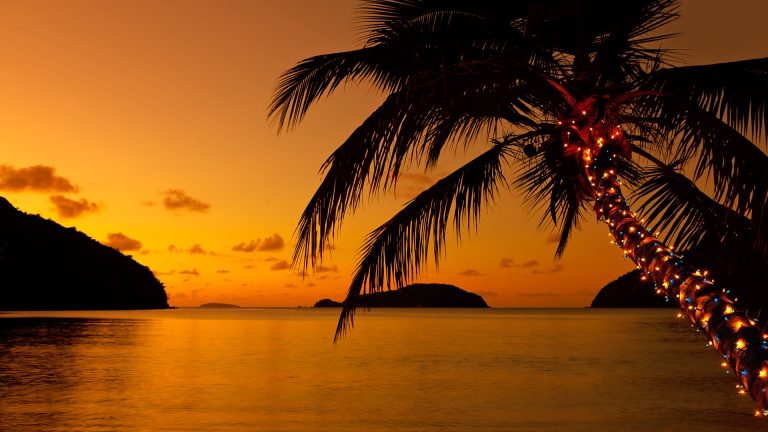
Holiday Greetings from Beneath a Florida Palm Tree


With everyone’s reliance on Facebook its difficult to provide any tidbit of news that hasn’t already been posted, reposted, and commented on a thousand times already.  However, it never hurts to summarize those Facebook posts and add some levity to a few of them each holiday season.

When we were kids, we were all in such a rush to grow up but 2019, like too many other recent years, proved that we thought growing up wouldn’t happen so quickly.  Unlike 2018 with its heart attack and a brain MRI, with one exception 2019 was sanguine in the health department.  The only major issue we had to deal with was the ever-present fact that aches and pains pop up in all sorts of places we never thought before we had a place. 

For Cathy 2019 was spent with her ever-watchful eye glued on her grandson Channing who seems to be growing like a weed.  At nearly 3 years old he seems to get smarter and quicker with each passing week.  If not his body then certainly his vocabulary.  He spends about 4 nights a week with us as his mother Charlotte completes a degree program and works in a job I covet – beer manager in a restaurant.  When not in heavy Grandma Cathy mode, she is busily pumping out knitted clothing at almost warp speed. Her sights are set on retirement as everyone’s should be once they reach 40 years old.  Hers is now within a few years of arriving.

Craig’s passion for teaching SCUBA diving came to a crashing end in early August when a student refused to follow instructions underwater and blasted for the surface at an unsafe rate.  As a result, Craig wound up in the emergency room with blood drawn to test for an air embolism (an air bubble in the blood that lodges in your brain) and was sent home from the ER on a 24-hour stroke watch!  Quickly accepting that his life was worth more than some idiot student who wouldn’t follow instructions, Craig hung up his SCUBA teaching fins and now only dives recreationally. 

Like most years since we met, this one was filled with travel.  Together we returned to Cathy’s favorite island Roatan off the coast of Honduras in February for her birthday SCUBA diving trip.  In July we traveled to the Pacific coast of Costa Rica for a week of diving and were met there by Craig’s childhood friend David Hennekens.  In late October for Craig’s birthday we spent a week on Barbados where the highlight was discovering that skipping out on a traffic ticket 28 years after the fact isn’t something the authorities keep in any database. Whew.

When not traveling with Cathy this year Craig made a solo trip to the Dominican Republic in January where once again, he failed to add Double-striped Thick-knee to his West Indies bird list. April took him to Alaska to pester his grandson Garrett for a few days and to add a few more craft breweries to the list of Alaska craft breweries where he and son-in-law Ryan have quaffed a brew.  June saw a return to Alaska to take Garrett to Barrow, the northernmost town in America on the Arctic Ocean on an unsuccessful search for Polar Bears. Maybe we will find one in 2021.   

In late June there was a trip to Minnesota to pester grand daughters and count prairie birds followed by another trip in September to the land of that purple football team to hang out with granddaughters again. Meanwhile in August, Cathy escaped to South Carolina with her kids to attend a niece's wedding and reconnect with her Carolina family.

With 2020 fast approaching we already have plans for Dana, her husband, and the 3 grand daughters to escape Minnesota winter in early February and spend some time with us in the sun.  In late February, Cathy and I will spend a week on Grand Cayman island diving with one of Cathy’s colleagues and her husband.  April will find Craig in Fairbanks working on visiting more Alaska State Parks, and back in Barrow Alaska in June to count birds.  Before that trip there will be a return to Minnesota to camp “up north” with Dana, David, 3 grand daughters and 1 grandson.  Then in July we fly to Venice Italy for a 10-day cruise of the Adriatic and Aegean Seas aboard Norwegian Cruise Line.

There should be a trip or two to South Carolina to see Cathy’s family somewhere in 2020.  With luck we will be diving the Red Sea off the coast of Egypt in October, and who knows what else may pop up to fill the year.

Whether you are Muslim, Jewish, Christian, Atheist, Hindu, Buddhist, or a follower of Isadora Duncan, we hope the 2019 Holiday Season finds you happy and healthy and looking toward the future.  With luck I will be writing a similar letter a year from now and with more luck you’ll be here to read it!

We hope you enjoy these season’s greetings sent from beneath a Florida palm tree. Actually, from beneath three of them.

Cathy and Craig