Thursday, August 2, 2012

Florida State Parks - The Northeast Region

Florida is blessed with one of the most extensive state park systems in the country. And, despite the presence of a criminal presently residing in the Governor’s mansion, it’s state parks are among the best managed nationally.
On moving to Florida in March 2008 I discovered that just like the National Park Service system, the Florida state parks system maintains a passport stamp program. Each state park has a stamp unique to it and if you slog your way through all of the parks in the system (currently 152 of them) and obtain a stamp for each one, you receive a complimentary front license place from the parks agency
Not all parks are able to maintain an active onsite staff (another of Governor Rick Scott’s many accomplishments) however passport stamps for those parks can be obtained at larger nearby parks. For instance, the stamp for unmanned Cedar Key Scrub Preserve is obtained at nearby Cedar Key Museum.
The first state park I visited in Florida was Collier-Seminole in Collier County. There I purchased my first passport stamp book and after traveling around the state for a year I finished obtaining stamps for all of the parks at Big Lagoon State Park in Escambia County Not satisfied to leave it there, I purchased another passport stamp book and completed the second round of visits at Fort Zachary Taylor in Key West – at the exact opposite end of the state from Big Lagoon.
Not many people have completed one circuit of the state park system let alone two times. That day at Fort Zach I purchased a third passport stamp book and in June 2011 finished filling it out at Torreya State Park in the Panhandle. Currently I am working on a fourth round of visits to each state park. When that’s completed I’ll do it a fifth time.
Because you can obtain stamps for the unmanned parks without actually visiting them, I decided during my third round of visits that I would go one step further in obtaining documentation of my visits.
This time around I began photographing the entrance sign for each of them. Doing so turned into a challenge because places like unmanned Mound Key Archeological Site and St. Lucie Inlet Preserve require a boat ride or a kayak paddle to physically visit the site and obtain a photo. Likewise, Yellow Bluff Fort in Jacksonville doesn’t actually have an entrance sign – just a plaque on a slab of concrete announcing the presence of the park.
Not long ago I had obtained photographs for all but two of Florida’s 152 actively managed state parks (there are 14 others that do not have a passport stamp or public access or both).
The two missing photos were for Egmont Key State Preserve at the mouth of Tampa Bay and Anclote Key State Park offshore from Tarpon Springs. I attempted to get a picture of Anclote in February 2012 but the ferry system used put me on South Anclote Bar where there were no signs.
On July 28, 2012 I took the ferry from Fort De Soto Park in Pinellas County over to Egmont Key. I had last been on this island in the mid-1990s when I accompanied the National Wildlife Refuge manager there.
All of Egmont is a National Wildlife Refuge but part of it is managed as a state park through a cooperative agreement. On this trip I wanted to visit the state managed area to see and photograph the sign.
That was accomplished easily on a brilliantly hot and bright July weekend afternoon.
Leaving Egmont Key for the mainland I was one park short of my goal – a picture of Anclote Key’s sign. Before making the 90 minute drive to Tarpon Springs where I planned to hire a boat for half a day to run out to the main island, I called Anclote Key to confirm the presence and location of a sign.
Imagine my surprise when I was informed that there is no sign for Anclote Key! Thus when I took the picture of the Egmont Key sign I had completed my quest and now have a photograph for all the actively managed parks that possess a sign (although the signs for Terra Ceia and Cockroach Bay are marginal in their acceptance as a park entrance sign).
To commemorate this accomplishment I am going to post my picture of each of the State Park signs.
With the picture comes a small blurb about the park – something unique or some experience I have had there in each of my visits. This post deals with all of the State Parks in the Northeast Region of Florida. From there I will continue to work my way through the rest of the state in three subsequent posts.
NORTHEAST REGION
Amelia Island State Park – South of Fernandina Beach and along the discontinuous route of famous Florida highway A1A, Amelia Island state park is a real sleeper in the state park system. Made up primarily of blindingly beautiful beaches Amelia provides excellent bird watching opportunities in migration.
Big Shoals – Tucked away in an obscure corner of northern Florida east of White Springs, Big Shoals State Parks claim to fame is the white water kayaking opportunities that abound when water conditions are perfect.
Big Talbot Island – One of several beach parks northeast of Jacksonville, Big Talbot is one of the better birding parks in this part of Florida.
Cedar Key Museum – In my mind there are two towns that still retain their original “real Florida” charm. They are Apalachicola in the Panhandle and Cedar Key. If you want to experience Key West in the 1930s before all the glitz and alcoholism struck then head to Cedar Key in Levy County. Visit the museum on the north side of town and learn about the early history of what has to be my most favorite Florida town.
Cedar Key Scrub Preserve – Located between the town of Cedar Key and the Lower Suwannee River National Wildlife Refuge this patch of remnant Florida scrub habitat is a strong hold for the endangered Florida Scrub-Jay.
Crystal River Archeological - This site along the Crystal River is set aside to protect six mound complexes set among the lowlands of and near the Crystal River estuary.
Crystal River Preserve – The lowland forests and estuarine emergent wetlands of this ecological gem can provide you with hour upon hour of enjoyment for fishing, birding, or just hanging out.
Devil’s Millhopper - Located at the edge of Tallahassee, this geological site is a must see for anyone interested in geomorphology. Be prepared with plenty of water in your backpack before you make the trek down the wooden stairs to the bottom. And it all started with just one pebble of sand.
Dudley Farm – I’ve never really understood why Dudley Farm became a State Park. Of course I never understood why Florida elected a criminal as governor either. Moving along quickly now…..
Fanning Springs State Park – At the edge of Fanning Springs along the Suwannee River, this park is more like a city recreational area than a site for resource protection.
Forest Capital Museum – Set at the south side of Perry in Taylor County, you can learn about the importance of the forest industry in Florida at this museum. And when the winds are out of the northeast you can do your learning while inhaling the scent from a nearby paper mill.
Fort Clinch State Park - The northernmost state park in Florida Fort Clinch is a Civil War era fort that was also used in the Spanish-American War. It’s also a superb area for winter bird watching. If you want to add Red-throated Loon or maybe a Snow Bunting to your Florida state list, this is the place to hang out and spend time looking.
Fort Cooper State Park – This is a remnant from the Second Seminole War, a major event in Florida’s early history. Fort Cooper is one of the state parks that the Tea Baggers want to sell off because they see no value in preserving history.
Fort George Island Cultural State Park – The mansion here at the edge of Timucuan National Park preserves a 1920s era golf and country club.
George Crady Bridge Fishing Pier – This fishing bridge just northeast of Jacksonville is just that – a fishing bridge. Why it qualifies as a State Park is a mystery that I likely will never solve.
Homosassa Springs State Wildlife Park – This is more of a self-contained zoo than a State Park. If you want to see West Indian Manatees go to nearby Crystal River National Wildlife Refuge where you can see them in the wild rather than here where you can see them through panes of thick glass.
Ichetucknee Springs State Park – River rafters and tubers are in seventh heaven on this beautiful stretch of forested river north of Fort White Florida.
Lafayette Blue Springs – There are 33 first-order springs in Florida and this state park protects one of them.
Little Talbot Island State Park – Crushingly beautiful beaches and nearby sand dune habitat await the visitor to this excellent state park northeast of Jacksonville.
Madison Blue Spring State Park – Another of Florida’s several state parks that protect a first order spring.
Manatee Springs State Park – Located at the outskirts of Chiefland Florida this park provides essential winter habitat for West Indian Manatees.
Marjorie Kinnan Rawlings - Travel to this little historical park near Cross Creek to learn about the idyllic life of the author of the classic novel “The Yearling.” Be aware of the skin of a massive Eastern Diamondback Rattlesnake hanging on a wall. One of his brothers or sisters might still be sliding around out there and they could very quickly ruin your entire day.
Mike Roess Gold Head Beach State Park – Another state park that is designed for the recreational needs of the masses rather than the habitat needs of the critters being replaced by all the masses of humans.
O’Leno State Park – Situated on the banks of the Santa Fe River near High Springs, Florida, O’Leno protects an extensive area of forest and associated forested wetlands. For some reason there always seem to be a lot of American Goldfinches here in winter.
Olustee Battlefield – This site of the largest Civil War battle in Florida is located in Baker County. Like most of the other sites this one commemorates a Confederate victory and a crushing Union defeat. How we ever won the war was a mystery.
Paynes Prairie Preserve State Park – Just south of Gainesville lies one of the absolute gems of the Florida State Park system. This is how a state park is supposed to look. Paynes Prairie is a major wintering area for the eastern population of Sandhill Cranes that nest in Minnesota, Michigan, Wisconsin and eastern Ontario.
Peacock Springs State Park – Another day, another park made from another spring. Next.
Pumpkin Hill Creek Preserve – The largest contiguous tract of coastal uplands remaining in Duval County is protected in Pumpkin Hill Creek Preserve. Well, its protected until the Tea Baggers sell it.
Rainbow Springs State Park – These beautiful springs are set aside for masses of tourists and swimmers.
River Rise Preserve – Just south of O’Leno, River Rise Preserve protects a region of the Santa Fe River where it emerges after flowing several miles under the surface of the land. Neat!
San Felasco Hammock Preserve – An excellent conglomeration of upland forest and wet meadow habitats await the visitor to this gem just north of Gainesville.
Florida’s Nature and Heritage Tourism Center – This site isn’t really a state park. If you have stopped at one of the tourist information centers on any of the freeways entering Florida you’ve seen all the same fliers and posters and free cups of coffee that you likewise see here. The only reason n I will stop here again is to get the passport stamp.
Stephen Foster Folk Culture Center – Located in White Springs, I remember my first time visiting here being so excited to learn about the history of Stephen Foster who penned those words in the song about “way down upon the Suwannee River.” It wasn’t until I arrived here that I learned Foster never once stepped foot on any portion of the river. He chose the Suwannee River just because he needed a rhyming word for the song. What a huge freaking disappointment. It was like learning that Santa Claus is your parents.
Suwannee River State Park – Some of the finest looks at one of the most important rivers in Florida can be obtained from this beautiful park set along a beautiful river. Some day before I expire I want to paddle a kayak the entire length of the Suwannee River. I can’t imagine how many cottonmouth’s I would see on that trip!
Troy Spring State Park – Yawn. Next.
Waccasassa Bay Preserve – Made up entirely of water the only access to this preserve is by boat or by swimming.
Yellow Bluff Fort – This diminutive site along the St. John’s River commemorates an important military position during the Civil War.
Yulee Sugar Mill Ruins – If you want to learn about the once-thriving sugar industry in this part of Florida this site near Homosassa is an excellent place to being your quest.

Florida's State Parks - The Northwest Region


Florida is blessed with one of the most extensive state park systems in the country. And, despite the presence of a criminal presently residing in the Governor’s mansion, it’s state parks are among the best managed nationally.
On moving to Florida in March 2008 I discovered that just like the National Park Service system, the Florida state parks system maintains a passport stamp program. Each state park has a stamp unique to it and if you slog your way through all of the parks in the system (currently 152 of them) and obtain a stamp for each one, you receive a complimentary front license place from the parks agency
Not all parks are able to maintain an active onsite staff (another of Governor Rick Scott’s many accomplishments) however passport stamps for those parks can be obtained at larger nearby parks.  For instance, the stamp for unmanned Cedar Key Scrub Preserve is obtained at nearby Cedar Key Museum.
The first state park I visited in Florida was Collier-Seminole in Collier County. There I purchased my first passport stamp book and after traveling around the state for a year I finished obtaining stamps for all of the parks at Big Lagoon State Park in Escambia County Not satisfied to leave it there, I purchased another passport stamp book and completed the second round of visits at Fort Zachary Taylor in Key West – at the exact opposite end of the state from Big Lagoon.
Not many people have completed one circuit of the state park system let alone two times. That day at Fort Zach I purchased a third passport stamp book and in June 2011 finished filling it out at Torreya State Park in the Panhandle.  Currently I am working on a fourth round of visits to each state park. When that’s completed I’ll do it a fifth time
.
Because you can obtain stamps for the unmanned parks without actually visiting them, I decided during my third round of visits that I would go one step further in obtaining documentation of my visits.
This time around I began photographing the entrance sign for each of them.  Doing so turned into a challenge because places like unmanned Mound Key Archeological Site and St. Lucie Inlet Preserve require a boat ride or a kayak paddle to physically visit the site and obtain a photo. Likewise, Yellow Bluff Fort in Jacksonville doesn’t actually have an entrance sign – just a plaque on a slab of concrete announcing the presence of the park.
Not long ago I had obtained photographs for all but two of Florida’s 152 actively managed state parks (there are 14 others that do not have a passport stamp or public access or both)
.
The two missing photos were for Egmont Key State Preserve at the mouth of Tampa Bay and Anclote Key State Park offshore from Tarpon Springs.  I attempted to get a picture of Anclote in February 2012 but the ferry system used put me on South Anclote Bar where there were no signs.
On July 28, 2012 I took the ferry from Fort De Soto Park in Pinellas County over to Egmont Key. I had last been on this island in the mid-1990s when I accompanied the National Wildlife Refuge manager there.
All of Egmont is a National Wildlife Refuge but part of it is managed as a state park through a cooperative agreement. On this trip I wanted to visit the state managed area to see and photograph the sign.
That was accomplished easily on a brilliantly hot and bright July weekend afternoon
.
Leaving Egmont Key for the mainland I was one park short of my goal – a picture of Anclote Key’s sign.
Before making the 90 minute drive to Tarpon Springs where I planned to hire a boat for half a day to run out to the main island, I called Anclote Key to confirm the presence and location of a sign.
Imagine my surprise when I was informed that there is no sign for Anclote Key!
Thus when I took the picture of the Egmont Key sign I had completed my quest and now have a photograph for all the actively managed parks that possess a sign (although the signs for Terra Ceia and Cockroach Bay are marginal in their acceptance as a park entrance sign).
To commemorate this accomplishment I am going to post my picture of each of the State Park signs.
With the picture comes a small blurb about the park – something unique or some experience I have had there in each of my visits.  I am going to begin with the Northwest Region (Panhandle) and work my way through the rest of the state in four subsequent posts.
NORTHWEST REGION


Alfred B. Maclay Gardens – Located at the edge of Tallahassee this beautiful collection of botanical specimens is set in an excellent area for woodland bird watching.


Bald Point State Park – Located off US Highway 98 in Alligator Point, Bald Point is mainly a light recreational area that comes complete with a spectacular view of the upper Gulf of Mexico. 


Big Lagoon State Park – This, the westernmost manned State Park in the system is located in the suburbs of Pensacola.  My first time there I saw a massive snake whose identity eluded me.  You can watch US Navy jets doing their final approach to the Pensacola Naval Air Station from this beautiful gem of land.


Blackwater River State Park – Set on the Blackwater River (duh!) north of Milton, this park appears to be heavily used by kayakers and tubers.  My second visit there, June 4, 2010, was greeted by a funnel cloud hanging ominously from the base of a rotating wall cloud.  Thankfully the funnel didn’t come any lower to the ground.


Camp Helen – in western Bay County not far from Panama City Beach, Camp Helen protects some prehistoric middens believed to be more than 4,000 years old.


  Constitution Convention Museum – All residents of Florida should spend some time in this little museum in Port St. Joe where they can learn about the work of 56 delegates who hammered out Florida’s first constitution in 1838. 


Deer Lake State Park – This gorgeous example of what Florida should look like contains some spectacular beach front habitat for critters like beach mice who were here long before the first condo developer arrived on the scene.


Econfina River State Park – Located at the end of a long narrow road in Taylor County, this is another Panhandle gem that abounds with wild habitat.


Eden Gardens – Located in Santa Rosa Beach the main attraction of Eden Gardens (other than the botanical treats) is Wesley House, a former resident of one of Florida’s early timber barons.

  
Edward Ball Wakulla Springs State Park – Just south of Tallahassee, Wakulla Springs State Park protects a large area of natural spring and accompanying upland forest.  Parts of the park are heavily used for recreation (noisy kids swimming) but away from the main development area you feel like you’re in the middle of nowhere as you explore the park’s environs.


Falling Waters State Park -  Located south of Chipley and set among gorgeous mesic deciduous forest, Falling Waters is one of my most favorite state parks because of the forest it protects. The only Copperhead I’ve ever seen alive and wild in Florida was coiled up and chilling out along a path to the springs one March day.


Florida Caverns State Park – Just north of Mariana Florida, this park is the only one in Florida that offers cave tours.  Unfortunately for me every time I’ve been there (four times) the cave tours have been sold out by the time I arrived.  “Next time” I’m getting there at 8:00 a.m. when the front gate opens.


Fred Gannon Rocky Bayou State Park -  Not far outside of Niceville, Fred Gannon is not too appealing to someone who prefers wild lands and wild critters.  Fred’s park is more for noisy recreationists. 


Grayton Beach State Park – Spectacular isn’t a strong enough superlative to use in describing the beauty of the sand beaches at this park near Santa Rosa Beach, Florida


Henderson Beach State Park – In Destin, this park has sugar white beaches that have to be part of why Destin is so hugely popular with tourists.  Inside the park there are extensive areas of coastal dune habitat that are likely the last refuge for some unique wildlife like beach mice.


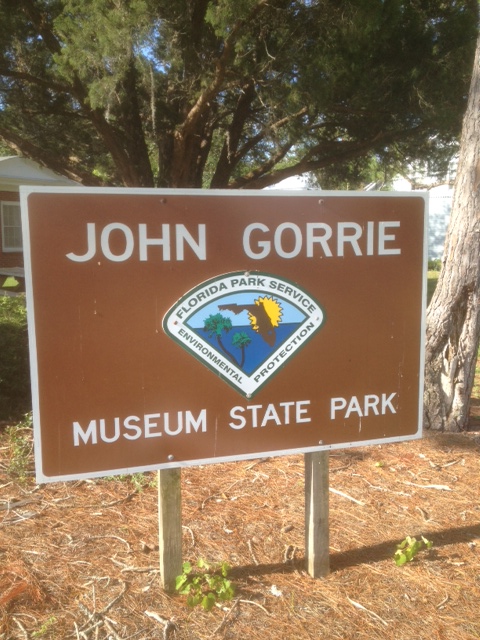
John Gorrie Museum -  Every resident of Florida should be thankful for John Gorrie.  He’s the man invented air conditioning and refrigeration.  This little museum in Apalachicola tells his story.


Lake Jackson Mounds – Only 2 miles north of the bowels of Tallahassee, Lake Jackson Mounds provides a pleasant escape from the rat race of all the rats trying to win their race in the state’s capital.


Lake Talquin – Just west of Tallahassee off State Road 20 this recreational area sits on the shore of a reservoir created by the damning of the Ochlockonee River.


Letchworth- Love Mounds – West of Tallahassee off US highway 90, Letchworth – Love Mounds protects several ceremonial mounds built by the original owners of Florida more than 2000 years ago.


Natural Bridge Battlefield Historic State Park– Another park near Tallahassee, Natural Bridge tells the story of yet another Union loss during the War of Northern Aggression (as everyone in the south calls the Civil War).  A re-enactment of the battle here is made every March.  The Union still loses every year.  Rednecks and other people with Confederate flags in their rear window will love this park.


Ochlockonee River State Park – In Franklin County just south of Sopchoppy, this park provides some of the best kayaking in the Panhandle.


Orman House -  If you enjoy visiting plantation homes along the James River in Virginia (which I do) you will enjoy your visit to this beautiful house perched on a bluff overlooking the Apalachicola River.


Perdido Key – The word “Perdido” means “lost” in Spanish.  Unfortunately for the key and the resources on it, Perdido Key has been found. Condo developments defile the coast in areas where beach mice used to rule.  Luckily this park, the westernmost in the state park system, protects a bit of what once was.


Ponce de Leon Springs State Park – Not too far off Interstate 10, Ponce de Leon Springs protects a beautiful spring that is used extensively by swimmers in the blistering hot summer months.  Despite its name, this is not the fountain of youth that Ponce de Leon sought.


St. Andrews State Park – Just south of Panama City, St. Andrews provides some beautiful habitat at sunrise but given the deluge of people here the rest of the time its best passed over for some place that isn’t like a parking lot in the local mall.


St. George Island State Park – The phrase “quintessential Florida Gulf Coast island” was coined for this incredibly beautiful patch of island. Like most of Florida, St. George Island is being consumed by development.  Fortunately someone had the foresight long ago to set aside this state park so people 100 years from now can see sea oats in the wild rather than in some sea oats museum.


St. Joseph Peninsula State Park – Protecting the tip of St. Joseph Peninsula this park offers fantastic bird watching, especially in spring migration, set among some of the most beautiful beaches you’ll ever see.  I’ve seen Pygmy Rattlesnakes every time I’ve been here so keep an ear perked for their diminutive buzz.


San Marcos de Apalache Historic State Park – Located in St. Marks, Wakulla County, this park is a perfect location to learn something about the very early history of Florida – in the days before sugar barons, railroads, and endless shopping malls.


Tarklin Bayou State Park – More than 4,000 acres of habitat for a species of pitcher plant is forever protected from developers – unless the Tea Baggers in the state legislature get their way and sell the state park to developers who could give a Rat’s Cheney about pitcher plants.


Three Rivers State Park – Just north of Sneads, this park could also be called Three-States State Park because it lies at the intersection of Alabama, Georgia and Florida.  There are lots of Summer Tanagers in the forests of this park.


Topsail Hill Preserve – Although protecting some beautiful beaches, this preserve seems to be more interested in catering to RV users than to resource protection.  Moving along now……


 Torreya State Park – Logistically one of the most confusing parks to find in Florida, once you track it down you will agree that it was worth the effort to get here.  Excellent forest birding can be had almost anywhere in this beautiful park.


Yellow River Marsh Preserve State Park – Four wetland communities are protected in this little patch of Santa Rosa County.

Tuesday, July 24, 2012

The Oldest and Newest National Wildlife Refuges in the Same Day

"How can you tell how it used to be when there's nothing left to see?....Jimmy Buffett
Theodore Roosevelt was many things. Important among them he was a cowboy who loved North Dakota. He was a progressive Republican (isn't that a contradiction in terms now?). He was the Secretary of the Navy. He was the 26th President of the United States. He was these and many other things. However in the minds of most people concerned with the conservation of the earth, Teddy Roosevelt was a visionary.
Teddy had his fingers in the establishment of the National Park Service and he was around when the National Forest System was established. And given my profession, Teddy was the one who had the foresight to establish the National Wildlife Refuges. Although my old colleague Sean Furniss will vigorously argue that there were other National Wildlife Refuges established before Pelican Island in Florida, that refuge is widely accepted to be the first refuge in the system. Pelican Island was set aside by Teddy to protect nesting habitat for colonial nesting waterbirds back in the days when plume hunters had largely decimated populations of herons and egrets so their plume-like feathers could adorn the hats of high society women in large cities.
Teddy helped put a stop to that foolishness in 1903 when he signed an Executive Order establishing Pelican Island National Wildlife Refuge. There were several other early refuges established in those days including Breton NWR in Louisiana (the only one for which there is photographic proof that Roosevelt actually visited) and Chase Lake NWR in Stutsman County, North Dakota. Chase Lake is home to the world's largest nesting colony of American White Pelicans. Its also set in a prairie landscape that is rapidly disappearing from the earth. However we have Teddy Roosevelt to thank for putting the earth first and setting aside these valuable wildlife lands.
From the humble beginnings of Pelican Island NWR in 1903, the National Wildlife Refuge system has grown to 556 separate units of land and water extending from the impossibly deep Marianas Trench National Wildlife Refuge in the western Pacific Ocean offshore from Guam, east to Sandy Point NWR on St. Croix in the US Virgin Islands.
Refuges range in size from the gargantuan Marianas Trench NWR at more than 50,500,000 acres to tiny Mille Lacs NWR in Minnesota that weighs in at just one acre. However no matter how large or how small refuges are there is one thing that is for certain - unless there is a time of extreme national emergency these lands will always be there for wildlife to have a home. Surrounding lands might easily be built up (look at John Neinz NWR almost in downtown Philadelphia for an example) but the refuge will still be there and critters will find it and be safe there.
The first National Wildlife Refuge I ever visited was Necedah NWR in my home state of Wisconsin. I traveled to Necedah in April 1969 when I was a senior in high school because at the time Necedah was one of very few places in Wisconsin where Wild Turkey's could be found and I wanted to see a Wild Turkey. The two things I remember the most about my first visit to a National Wildlife Refuge are 1) almost being struck by a bolt of lightning as 2) I watched a group of 24 Wild Turkey's milling around by the side of the road just being turkeys.
When I started working for the US Fish and Wildlife Service in August 1977, my first job was as an Ascertainment Biologist in the Service's Region 3 based in Minneapolis Minnesota. From that office a group of four of us evaluated lands proposed to the Service for acquisition and inclusion in the National Wildlife Refuge system in Illinois, Indiana, Michigan, Minnesota, Ohio and Wisconsin. We also dabbled a bit in the establishment of the Waterfowl Production Area program in Iowa. All of these areas in each of those states required a lot of travel. My supervisor at the time, Chuck Elliott, wanted us to always stop by any refuges we were near to check out the landscape and to meet fellow Service employees. It was from that experience that I decided that one day I wanted to have visited all of the Refuges in the system.
As of today I have visited 532 of the 556 National Wildlife Refuges in the system. My latest refuge Everglades Headwaters NWR in central Florida is also the newest refuge in the system. The first tract of land we own at Everglades Headwaters is a 10 acre tract east of Lake Hamilton in Polk County. From this humble beginning plans are for the entire Refuge and Conservation Area to include 150,000 acres of which about 100,000 acres will be protected through perpetual easements with landowners who are interested in protecting and preserving the prairie-like landscape at the upper end of the Everglades.
I began my day last Sunday with a visit to Pelican Island NWR. I arrived there about sunrise and spent an enjoyable hour (its always enjoyable at Pelican Island) traipsing around looking for birds and feeding mosquitoes. From there I stopped by Archie Carr NWR a series of discontinuous tracts of ocean front established to protect nesting habitat for endangered Sea Turtles whose ancestors have visited Florida long before Europeans came and upset the balance. From Archie Carr I worked my way across the increasingly human-dominated landscape south of Orlando and arrived at our one tract of land at Everglades Headwaters in early afternoon. I arrived there just in time to watch a violent afternoon thunderstorm roll in from the south. Before it hit, however, I crawled under the boundary fence and stood firmly on this newest piece of property that is owned by the earth but which humans get to watch over and protect from other humans.
As I stood there on our newest National Wildlife Refuge I thought about all the miles I have traveled and all the places I have seen and all the wildlife I have watched in my quest to visit each of the 556 areas protected as a National Wildlife Refuge. I remembered the landowner in Wisconsin who assaulted and battered me with a ball peen hammer when I stopped by his farm one day to try to purchase a wetland from him. I thought about the sky white with Snow Geese and Ross' Geese at Sutter NWR in California one February morning long ago. I thought about the sea otters I watched pounding abalones to a smithereens offshore from Kodiak NWR in Alaska and I thought about the moose that almost ran me over as I walked in the forest at Umbagog NWR in New Hampshire. I thought about the deathly silence in the remnant forest of Guam NWR and remembered that the silence was like that predicted in Rachel Carson's book "Silent Spring" Only on Guam the silence came from a ravenous brown snake introduced from the Solomon's Islands who has a sweet spot on its taste buds for birds and their eggs. Hopefully the refuge will help turn things around and some bird song will return to that forest some day.
I thought about these and many other pleasant experiences I have had while trying to visit all of the National Wildlife Refuges and as I did I couldn't help saying "bully" a few times for Teddy Roosevelt. If he hadn't set aside that first National Wildlife Refuge long ago none of us might have ever have had the opportunity to experience a glimpse of what once was before, as the Jimmy Buffett song warns "there's nothing left to see." Happily the National Wildlife Refuges assure us that there will always be something to see.
Will I ever get to all of the Refuges in the system? Its highly unlikely because some of the refuges in the mid-Pacific are so incredibly remote. Unless I want to swim from Honolulu I probably will never get to them. Still I will try to visit as many of them as I can for as long as I can. But each subsequent visit to a new refuge won't be able to compare with the day I visited the oldest one and the newest one, both of which are doing their best to help the earth look like its supposed to look.
Thanks again Teddy Roosevelt
.